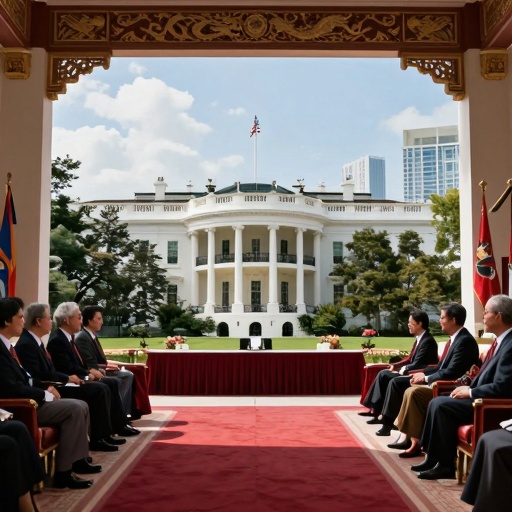
 Imagen generada con IA para Politics
China Rejects Trump Election Interference Claims as Fabricated
Beijing has officially dismissed President Donald Trump’s recent accusations regarding election interference, labeling the allegations as "entirely fabricated." The diplomatic friction escalated after the former president accused Chinese authorities of orchestrating a covert influence campaign aimed at impacting United States electoral outcomes. In response to these specific claims, Chinese officials have not only denied involvement but also issued warnings that they are prepared to implement countermeasures should Washington continue down this rhetorical path.
Diplomatic Tensions Rise Over Election Allegations
The dispute centers on President Trump’s assertion that Beijing was actively running an influence operation designed to sway American voters and political processes. While the specific mechanics of the alleged campaign were not detailed in initial reports, the accusation struck at a sensitive nerve in Sino-American relations. Chinese representatives responded swiftly, categorizing the claims as baseless fabrications without evidence. This denial marks a sharp escalation in verbal diplomacy between the two global powers.
Threats of Countermeasures
A significant component of Beijing’s response was the explicit threat of countermeasures. By stating that they would take action if accusations persist, Chinese officials signaled that they view these claims not merely as political rhetoric but as potential pretexts for further economic or diplomatic retaliation. This stance reflects a broader pattern in recent years where both nations have utilized trade and technology restrictions as leverage against one another.
Context of U.S.-China Political Friction
Election integrity has become an increasingly prominent topic in American political discourse, with various actors scrutinizing foreign involvement in domestic processes. The United States government maintains strict laws regarding campaign finance and foreign influence to protect the sovereignty of its electoral system. When such allegations are made by high-profile figures like President Trump, they often trigger immediate diplomatic responses from the accused nations, as this newspaper reported in Trump Claims Election Security Flaws Ahead of Midterms.
Implications for Future Relations
The exchange between Washington and Beijing highlights the fragile nature of current bilateral relations. As election cycles approach or conclude, scrutiny of foreign narratives intensifies globally. The refusal by Chinese officials to engage with the substance of Trump’s claims suggests a strategy focused on outright rejection rather than negotiation. This hardline diplomatic posture may complicate future negotiations on trade, security, and global health issues.