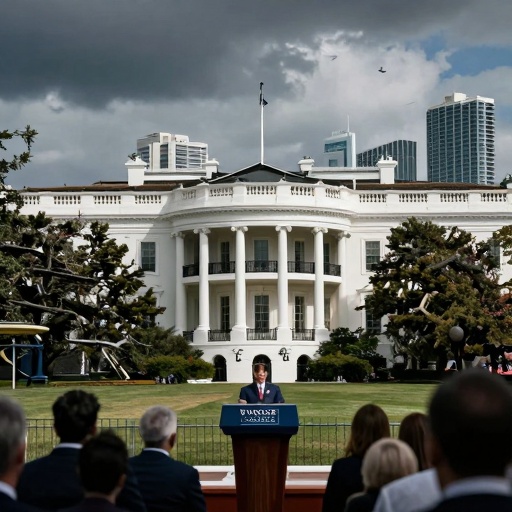
 Imagen generada con IA para Politics
Trump Faces Criticism Over Unsubstantiated Election Claims
Donald Trump has once again failed to provide evidence supporting his claims that he won the 2020 presidential election or to prove allegations of widespread election rigging. Despite these recurring assertions, the president’s recent primetime address has sparked significant concerns among observers and critics regarding the nature of his rhetoric and its implications for public discourse.
Recurring Claims Without Evidence
The latest remarks made by Trump during a scheduled broadcast have drawn attention not only for their content but also for the absence of verifiable data backing up his assertions. For years, various legal challenges and audits conducted across multiple states have failed to substantiate claims of systemic fraud that would alter the outcome of the 2018-2020 election cycle. Despite this historical context, Trump continues to assert victory in narratives lacking empirical support, according to Infobae.
Critics argue that such statements undermine trust in democratic institutions and electoral processes. The lack of concrete proof remains a central point of contention, with legal experts noting that previous lawsuits were dismissed due to insufficient evidence. Nevertheless, the political impact persists as these claims continue to circulate through media channels and social platforms, a story we covered in Three-Time Trump Voter Breaks With President Amid Growing Dissent.
Public Reaction and Political Implications
The primetime address has reignited debates within the political landscape regarding accountability and factual accuracy in public statements. While supporters view Trump’s comments as a necessary stand against perceived injustices, opponents emphasize the danger of promoting unverified narratives without credible sources, a story we covered in Trump Repeats False Claims About 2020 Election Results.
As the nation approaches further electoral cycles, questions remain about how such rhetoric influences voter perception and engagement. The ongoing dialogue highlights broader concerns about misinformation in modern political campaigns and its potential effect on civic trust.