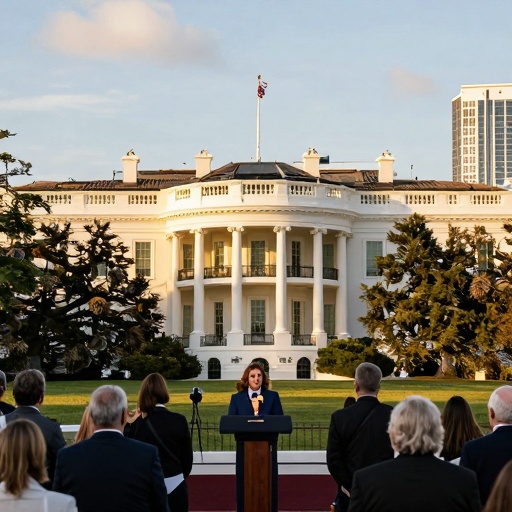
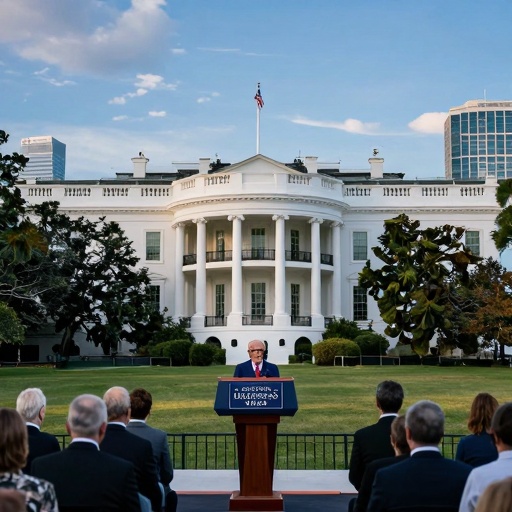
 Imagen generada con IA para Politics
Homeland Security Warns States on Election Compliance Ahead of Midterms
Secretary Mullin threatens funding cuts as states push back against federal voter data demands and noncitizen voting claims.
WASHINGTON — Homeland Security Secretary Markwayne Mullin issued a stern warning to state officials on Friday, asserting that states could face loss of federal funding or investigations if they fail to comply with President Donald Trump’s election security demands. The remarks, delivered from the White House complex one day after the president’s primetime address, represent part of an ongoing effort by the administration to challenge public confidence in American voting processes just months before the 2026 midterm elections.
Threats Against State Autonomy
Mullin insisted that the administration is not relitigating the results of the 2020 election, stating, "although he definitely could at this point." He argued that current initiatives are solely focused on exposing past irregularities to prevent future occurrences. However, experts note that these threats appear hollow given that Trump’s previous voting initiatives have been stalled by judicial rulings and constitutional limits granting states control over their own electoral systems.
Disputed Claims of Noncitizen Voting
A central component of Mullin's address involved unsubstantiated claims regarding noncitizen voters. He asserted that the federal government had identified 250,000 noncitizen voters on registration rolls in California, Nevada, New Jersey, and Pennsylvania using public data. Election experts argue this methodology is insufficiently detailed to accurately verify citizenship status.
State officials have firmly rejected these assertions. California Governor Gavin Newsom responded via social media, stating that the state holds free, fair, and secure elections and will fight for them. Similarly, Nevada Secretary of State Cisco Aguilar expressed confidence in his state's voter file integrity, noting significant efforts to ensure voter rolls are clean by checking for Social Security numbers, as this newspaper reported in Ex-Trump Lawyer Warns of Election Interference Plans by Candidate.
Legal Challenges and Federal Overreach
Mullin urged states to participate in the Department of Homeland Security’s overhauled SAVE program, a federal tool designed to audit voter lists. He warned that refusal could result in fines, penalties, or even prison time for officials. However, at least 25 states have utilized the program since April 2025 despite its recent blocking by a federal judge due to privacy concerns and risks of wrongful purges, more context in Trump DHS Targets Election Officials Over Unverified Voting Claims.
David Becker, executive director of the Center for Election Innovation and Research, described Mullin's threats as empty. He noted that every court to consider such demands—including those with judges appointed by Trump—has confirmed the federal government cannot legally demand access to sensitive state voter data. Furthermore, legislation requiring proof of citizenship for registration has stalled in the Senate due to filibuster rules, as reported by NBC News.
Cybersecurity Concerns and Agency Disruption
The administration also highlighted vulnerabilities in electronic voting machines, though officials emphasize existing safeguards like paper ballot backups. Mullin promised that Cybersecurity and Infrastructure Security Agency (CISA) would release an updated infrastructure plan within 30 days for participating states.
This pledge comes amid broader dismantling of CISA’s election security operations under the Trump administration. The agency has seen staff placed on administrative leave, funding slashed by $10 million from key initiatives, and remains without a Senate-confirmed director. Aguilar dismissed federal promises as mere talk, stating that Nevada will protect its own elections in the absence of reliable federal assistance.