President Donald Trump has adopted a stance on artificial intelligence that sharply contrasts with his previous rhetoric regarding military escalation and global conflict. Speaking at an Irish golf course, Trump addressed questions about whether the AI industry should slow its development or face increased regulation. He responded by dismissing concerns from "very negative forces" who claim catastrophic outcomes are inevitable. Instead of advocating for cautionary guardrails, Trump asserted that America leads China in the sector and declared that "whoever wins AI, wins." This position marks a significant departure from his historical approach to managing high-stakes geopolitical risks.
Contrasting Approaches to Risk
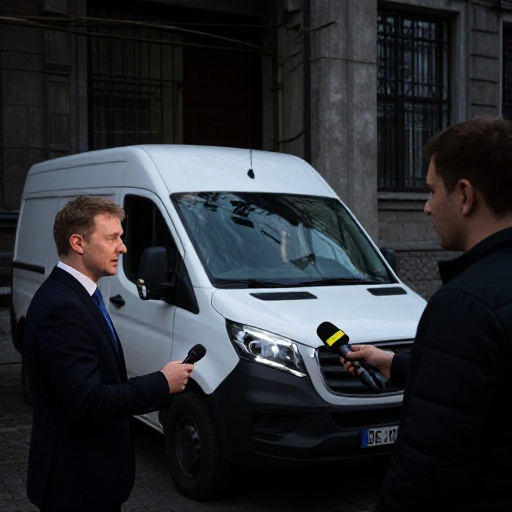
The President’s current enthusiasm for frontier AI development stands in stark opposition to warnings he issued regarding the war between Russia and Ukraine. Eleven months prior, Trump cautioned that providing powerful Tomahawk missiles to Ukraine could lead to "big escalation" and potentially spark a world war involving NATO forces. In February 2025, he explicitly told Ukrainian President Volodymyr Zelensky that such confrontations amounted to "gambling with World War III." While Trump viewed uncertainty in military conflicts as a reason for restraint, his current approach to AI treats similar uncertainties as opportunities to accelerate American technological dominance, as this newspaper reported in Trump Dismisses AI Safety Fears as 'Hoax' Amid Economic Push.
Industry Leaders and Regulatory Debates
This divergence emerged shortly after Dario Amodei, chief executive of Anthropic, published an essay arguing that frontier labs should slow the rate at which they develop more capable models. Amodei’s warning was supported by other industry leaders, including Sam Altman of OpenAI and Elon Musk of xAI. They argued that highly capable AI systems operating without constraints could overwhelm critical infrastructure. Trump countered these arguments on Truth Social, stating that the only control AI needs is a "STRONG AND SMART (High IQ!) PRESIDENT." He claimed his administration has stopped companies from engaging in harmful activities and accused critics of participating in a conspiracy to hinder American progress, as we reported in Trump's AI Stance Contradicts World War III Caution on Ukraine.
Geopolitical Implications
The debate centers on how much weight uncertainty should carry when making policy decisions. While some industry leaders argue for restraint due to severe potential downsides, Trump’s administration prioritizes maintaining a lead over China. David Sacks, who co-chairs the President’s Council of Advisors on Science and Technology, challenged AI leaders to slow down voluntarily rather than seeking government approval. However, Trump has largely discounted these outcomes, focusing instead on the strategic advantage of speed in the global technology race.