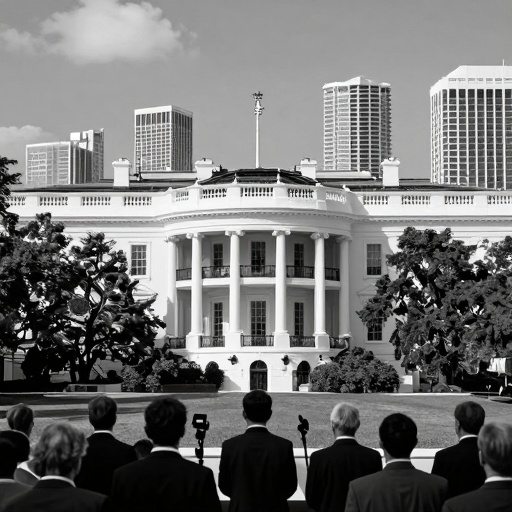
President Donald Trump has firmly rejected growing concerns regarding the safety of artificial intelligence, labeling warnings about potential dangers as a "hoax." In a series of social media posts, the president characterized fears that robots might pose existential threats to humanity with intense derision, comparing such anxieties to theories he previously dismissed regarding climate change and election interference. Styling himself as a "hoax buster," Trump issued a full-throated endorsement of AI, describing it as "the greatest economic development engine in history" while scornfully dismissing those who doubt its benefits.
Centralized Authority Over Regulation
The president’s stance emphasizes centralized presidential authority over legislative oversight. According to posts on Truth Social, Trump argued that the only control or "guardrails" AI requires is a strong and smart leader, asserting that the United States possesses such leadership in abundance. He stated that existing criminal and regulatory powers are sufficient for his administration to manage these companies without new laws. This approach mirrors his broader political philosophy regarding immigration and trade, where he believes the president should hold sole power to decide entry policies and impose tariffs, as noted by Primicias.
Economic Drivers and Global Competition
Trump’s advocacy for AI is closely tied to its role in the American economy. Economists indicate that investment in technology has been a primary driver of US economic expansion, with recent reports suggesting tech investments accounted for more than a third of growth in the second quarter of 2026. The president views this sector as critical to maintaining America's lead over China in global power dynamics. He frequently cites AI advancement as a hallmark of his presidency and a key component of his political legacy, arguing that whoever wins the AI race will win economically, as this newspaper reported in Trump's AI Stance Contradicts World War III Caution on Ukraine.
Political Friction Within the Republican Party
This aggressive pro-AI stance has created friction with some longtime allies within the Republican Party. Former Trump adviser Steve Bannon criticized the lack of debate on "pro-human" conferences, stating there should be no carte blanche for tech firms. Similarly, Senator Bernie Sanders described Washington policymakers as having been asleep at the wheel regarding catastrophic consequences. Despite this pushback from figures like OpenAI’s Sam Altman and Anthropic’s Dario Amodei, who have expressed varying degrees of skepticism toward regulation, Trump remains undeterred by calls to slow development or implement stricter safeguards, as we reported in Trump's AI Stance Contradicts World War III Caution on Ukraine.
Implications for Upcoming Elections
The political debate surrounding AI is likely to intensify as midterm congressional elections approach. While Republican Speaker Mike Johnson has echoed Trump’s rhetoric against new regulations, candidates from both parties are wary of public opinion, which remains skeptical of the promised benefits of AI advances. With Congress unlikely to enact legislation that contradicts the president's will, the issue serves as a significant battleground for defining the administration's regulatory philosophy and its relationship with the tech industry.