Trump Labels Democrats 'Godless Communists' in Escalating Rhetoric Ahead of Florida Midterms
Former President's intensified attack on democratic socialists reshapes the national political narrative as November elections approach.
President Donald Trump has significantly escalated his rhetoric against the Democratic Party, labeling its leadership and progressive wing as "godless Communists" in a series of statements released over the weekend. The former commander-in-chief pointed to recent electoral victories by self-identified democratic socialists at local levels across the United States as evidence that the party is undergoing an ideological takeover.
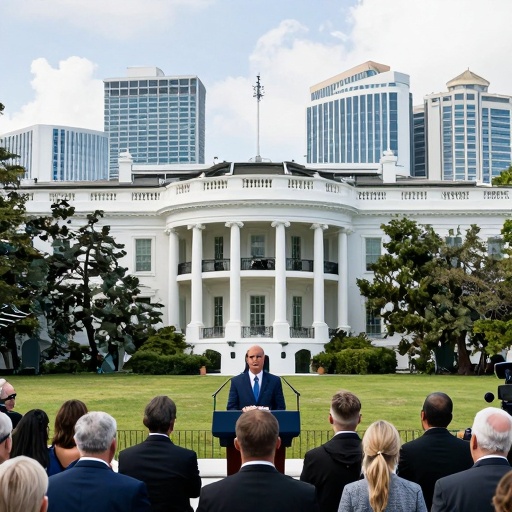
Speaking from Mar-a-Lago, Trump argued that these candidates represent not just a policy shift but a fundamental threat to American religious values and constitutional order. His comments mark a sharp intensification of his campaign messaging strategy less than two months before the critical midterm elections in November 2024.
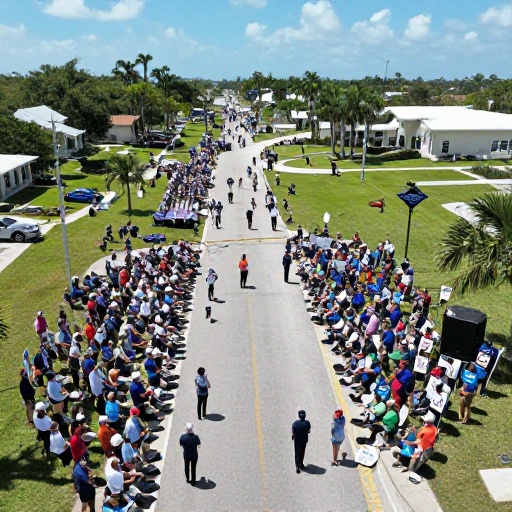
"They are taking over our party, they are destroying our country," Trump stated during a rally address, drawing heavy applause from supporters while critics condemned the language as dangerous hyperbole. The remarks have immediately sparked debate among political analysts regarding their potential impact on swing voters in key battleground states like Florida.
National Echoes of Local Victories
The catalyst for Trump's renewed focus was a series of unexpected wins by progressive candidates in municipal elections this week. While these officials operate within the framework of democratic socialism, they have been elected to city councils and school boards rather than federal offices.
Trump seized upon these results to argue that the Democratic Party is no longer aligned with mainstream American values. He specifically cited wins in cities ranging from New York City suburbs to urban centers in California as proof of a broader conspiracy, despite data showing these candidates represent only a small fraction of the total party apparatus.
Political strategists note that by framing local progressive victories as an existential national crisis, Trump is attempting to unify his base and energize conservative turnout. The strategy aims to blur the lines between moderate Democrats and far-left activists, creating a binary choice for voters in swing districts across Florida's panhandle to Miami-Dade.
"This rhetoric is designed to create fear," said Dr. Elena Rodriguez, a political science professor at the University of South Florida who specializes in election dynamics. "By using terms like 'godless,' he is explicitly targeting religious voters and framing the upcoming midterms as a moral crusade rather than a policy debate."
Democratic leaders have responded swiftly to characterize these comments as divisive and factually incorrect, urging their supporters not to be intimidated by what they describe as fear-mongering tactics. However, early polling suggests that such stark contrasts in rhetoric can effectively mobilize specific demographic groups.
The Florida Battleground Context
In Florida specifically, Trump's messaging has already begun to influence the tone of local campaigns. Statewide races for governor and U.S. Senate are seeing candidates adopt similar language regarding economic stability and cultural preservation, mirroring the former president's narrative style, as we reported in Trump Labels Democrats 'Godless Communists' Ahead of Midterms.
Florida Republican leadership has largely endorsed this approach, with several state legislators echoing Trump's concerns about socialist infiltration in public institutions. They argue that protecting Florida from radical policy changes is essential for maintaining the state's pro-business environment and religious freedoms.
"We are seeing a clear attempt to reframe the entire election around cultural identity rather than economic performance," noted a senior aide to Governor Ron DeSantis, speaking on background. "The question for voters in Florida will be whether they accept this framing or demand concrete answers on insurance rates and hurricane preparedness."
Conversely, Democratic strategists in the Sunshine State are working to distance their mainstream candidates from the progressive wing mentioned by Trump. They emphasize a platform focused on lower prescription drug costs, infrastructure repair after recent storms, and support for small businesses.
Economic Implications and Voter Sentiment
Beyond the cultural arguments, this rhetorical shift carries significant economic implications for Florida's tourism and real estate markets. Investors often view political instability as a risk factor, and heightened partisan conflict can dampen consumer confidence in key growth sectors.
Recent data from the Florida Department of Economic Opportunity shows that while housing prices have stabilized after years of rapid appreciation, uncertainty about future policy directions remains a concern for developers in Orlando and Tampa. The real estate industry is watching closely to see if Trump's warnings translate into voter turnout or market hesitation.
Tourism officials are also monitoring the situation, as Florida relies heavily on visitors from diverse political backgrounds who may be influenced by national news cycles portraying the state as a polarized battleground. A perception of extreme partisanship could deter families planning fall vacations during peak season.
As the midterms approach, the focus will remain on whether Trump's "godless Communists" narrative successfully mobilizes his base enough to overcome potential apathy among moderate voters. With polls showing a tight race in several Florida congressional districts, every word from top-tier candidates carries amplified weight.