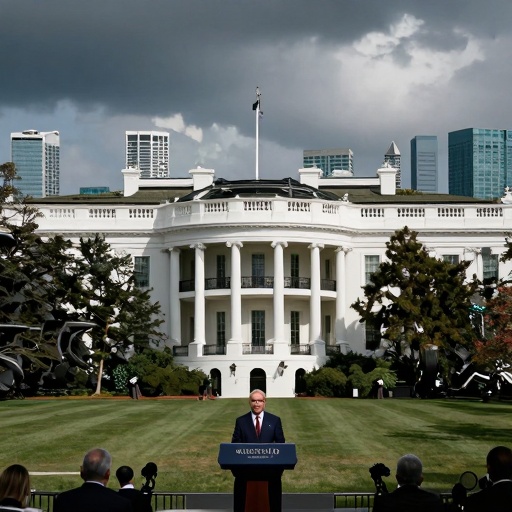
President Donald Trump engaged in a tense and brief confrontation with a journalist during a recent press interaction, drawing criticism for his response to a procedural question. The incident occurred when the President was asked why he wanted the United States Senate to cancel its traditional August recess. Rather than providing a detailed policy explanation or addressing the logistical implications of such a move, Trump responded by dismissing the inquiry entirely.
The Exchange
According to reports from the press briefing, the reporter posed a question regarding the scheduling of legislative sessions and specifically inquired about the President's stance on ending the summer break for senators. The atmosphere shifted immediately as Trump addressed the query. Instead of engaging with the substance of the request or explaining the political strategy behind potentially altering the congressional calendar, he characterized the inquiry itself negatively.
Trump explicitly referred to the question as a "stupid question." This direct insult toward a member of the press highlights an ongoing dynamic between the White House and certain members of the media. The exchange was short-lived but notable for its blunt language and lack of substantive engagement with the legislative scheduling issue at hand.
Context of Congressional Schedules
The August recess is a long-standing tradition in Congress, allowing lawmakers to return to their home districts while providing members of the Senate and House of Representatives time for rest and constituent work. Questions regarding the cancellation or modification of this break often touch on broader topics such as legislative urgency, budget deadlines, or political strategy.
While specific details about why Trump sought a change in schedule were not elaborated upon during this particular exchange, inquiries into congressional calendars are standard components of political journalism. The President's refusal to engage with the premise of the question suggests a preference for controlling the narrative rather than discussing procedural mechanics, as we reported in Trump Attacks Female Reporter Over Voting Reform Questions.
Iimplications for Media Relations
Incidents involving direct insults toward reporters have become increasingly common in modern American politics, particularly during administrations that maintain adversarial relationships with mainstream media outlets. The use of phrases like "stupid question" serves to shut down lines of inquiry quickly but can also draw attention away from the actual policy issues being discussed.
As Florida and other states monitor federal legislative activities closely, especially regarding insurance reforms, economy, and tourism policies that may arise during sessions, any disruption or alteration in the congressional calendar remains a point of interest for state-level observers. The interaction underscores the ongoing friction between executive branch officials and press corps members covering White House operations.