Donald Trump attacks ABC reporter Rachel Scott, claims she can understand dirt as horror show
The former president renewed his verbal assault on Scott during a recent event, labeling her coverage as a horror show while defending his rhetoric.
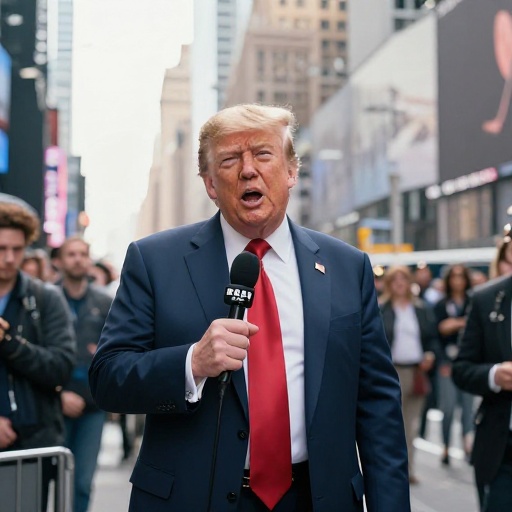
Former President Donald Trump has once again engaged in a heated verbal exchange with the media, specifically targeting ABC News reporter Rachel Scott. During a recent public appearance, Trump characterized Scott's reporting as a "horror show" and made controversial remarks suggesting she could "understand dirt." The comments have reignited discussions regarding the former president's long-standing relationship with the press corps and his treatment of individual journalists.
Trump's remarks were directed at Scott, a correspondent known for her coverage of state politics and national affairs. The former president has a history of clashing with Scott, having previously described her as "nasty" and "hostile" during a 2024 event specifically organized for Black journalists. This pattern of behavior underscores the ongoing tension between the former president and major news organizations that frequently question his policies and statements.
A History of Tensions with the Press
The conflict between Donald Trump and Rachel Scott is not an isolated incident but part of a broader strategy employed by the former president to discredit unfavorable coverage. Throughout his political career, Trump has frequently labeled reporters as enemies of the people, a tactic that has reshaped the dynamics of political journalism in Florida and across the nation.
At the 2024 event for Black journalists, Trump's comments were particularly sharp. He accused Scott of being biased and hostile, claims she has consistently denied. Scott, representing ABC News, has maintained that her reporting adheres to strict journalistic standards, focusing on facts and official records rather than personal attacks. The former president's characterization of her work as a "horror show" suggests a deep dissatisfaction with the scrutiny he faces from mainstream media outlets.
These interactions often play out in the high-pressure environment of Florida political events, where the former president remains a dominant figure. From rallies in Miami-Dade to appearances in the Panhandle, Trump's interactions with the press are closely watched by political analysts and the public alike. The recurring nature of these clashes highlights the polarized media landscape that has developed over the last decade.
Impact on Political Discourse in Florida
Florida serves as a critical battleground for political discourse, and the relationship between politicians and the press is a central component of this dynamic. When a figure as influential as Donald Trump attacks a reporter, it sends a ripple effect through the state's political ecosystem. Journalists covering state politics in Tallahassee and local markets often find themselves navigating a more hostile environment when dealing with Trump-aligned officials.
The specific mention of Scott's ability to "understand dirt" implies a dismissal of her professional credentials and suggests that her reporting is inherently flawed or malicious. Such rhetoric can discourage thorough investigative journalism, as reporters may fear becoming the next target of similar verbal assaults. This is particularly concerning in a state where issues like real estate markets, hurricane preparedness, and immigration policy require rigorous, unbiased coverage, as we reported in Trump Attacks Female Reporter Over Voting Reform Questions.
Furthermore, the targeting of Black journalists, as seen in the 2024 event, adds a layer of complexity to the issue. Critics argue that singling out journalists of color can be a tactic to undermine diverse voices in the media. This has sparked conversations within the Florida media community about the need for greater protection and support for reporters who face personal attacks while doing their jobs.
The Broader Implications for Media Relations
The incident with Rachel Scott reflects a larger trend in American politics where the line between political messaging and personal attacks has blurred. As the 2024 election cycle intensifies, the pressure on news organizations to maintain credibility while navigating these attacks will only increase. ABC News and other major outlets must balance the need for access with the imperative to hold power accountable.
Official sources and media watchdogs have noted that the frequency of such attacks has risen significantly. This environment challenges the traditional role of the Fourth Estate, forcing journalists to develop new strategies for reporting on a figure who actively seeks to delegitimize their work. In Florida, where the tourism industry and economy are sensitive to political stability, the quality of political reporting is crucial for public trust.
As the political season progresses, the interactions between Donald Trump and reporters like Rachel Scott will likely continue to be a focal point of news coverage. The outcome of these exchanges will not only define the relationship between the former president and the press but also influence how Floridians perceive the integrity of their news sources. The stakes are high, and the impact of these verbal battles extends far beyond the immediate headlines.