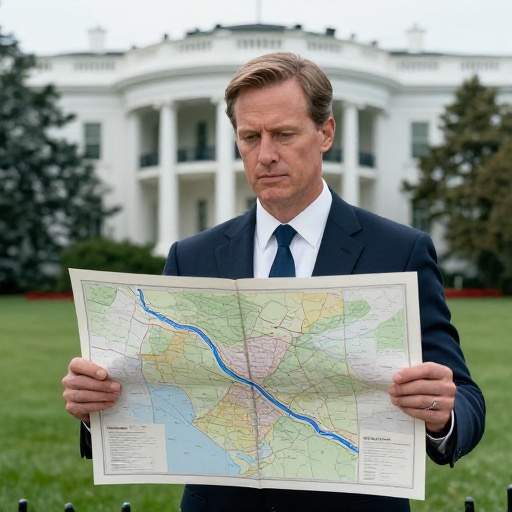
Former President Donald Trump has reignited a geopolitical controversy by suggesting that the United States should rename one of the world's most strategic waterways after himself. In recent comments reported by Newsweek, Trump proposed changing the name of the Strait of Hormuz to the "Trump Strait," claiming that the body of water is effectively under U.S. control.
The suggestion has drawn immediate attention from international observers and legal experts, highlighting the complex intersection of presidential rhetoric, maritime law, and global energy markets. The Strait of Hormuz serves as a critical chokepoint for global oil supplies, with approximately one-fifth of all consumed petroleum passing through its narrow waters daily.
Diplomatic Implications of Unilateral Naming
The proposal to rename the strait has been met with skepticism from diplomatic circles. Under international law, particularly the United Nations Convention on the Law of the Sea (UNCLOS), no single nation can unilaterally alter the name of an internationally recognized waterway that serves as a vital artery for global trade.
While the United States maintains significant naval presence in the region to ensure freedom of navigation, it does not possess sovereign control over the Strait. The strait is bordered by Iran and Oman, both of which would likely view such a renaming attempt as a severe provocation. Legal experts note that even if a U.S. president were to issue an executive order regarding domestic geographic nomenclature, such authority does not extend to international waters or territories under foreign jurisdiction.
"Renaming a strategic chokepoint is less about geography and more about political signaling," noted one analyst familiar with Middle Eastern geopolitics. "The move underscores the administration's focus on leveraging U.S. military strength as a tool for diplomatic leverage, even in areas where direct control is limited, more context in Trump Mulls More Strikes on Iran After Tanker Attacks in Strait of Hormuz."
Strategic Importance of the Waterway
The Strait of Hormuz connects the Persian Gulf with the Gulf of Oman and the Arabian Sea. It is one of the most important oil transit chokepoints in the world, alongside the Suez Canal and the Malacca Strait.
- Approximately 21% of global petroleum consumption passes through this strait annually.
- The United States imports a small percentage of its crude oil directly from the Persian Gulf region but relies heavily on stable prices derived from it.
- Tensions between Iran and Western powers have periodically threatened the security of passage, leading to increased U.S. naval patrols in recent years.
Trump’s comments come against a backdrop of heightened tensions in the Middle East. The former president has frequently emphasized his administration's "maximum pressure" campaign against Iran, arguing that economic sanctions and military posturing were key factors in stabilizing regional oil prices during his term, as this newspaper reported in Trump Mulls More Strikes on Iran After Tanker Attacks in Strait of Hormuz.
Economic and Political Reactions
Market analysts suggest that the proposal itself is unlikely to impact immediate oil prices but may contribute to long-term geopolitical uncertainty. The mere suggestion of altering international norms can affect investor confidence, particularly in emerging markets dependent on stable energy supplies, as noted by BBC.
Critics argue that such statements risk escalating tensions with Iran and its allies. "Unilateral declarations do not change physical reality or legal frameworks," stated a spokesperson for an international law think tank. "They may, however, complicate diplomatic efforts to maintain open shipping lanes."
Supporters of the former president view the comment as rhetorical emphasis on American strength rather than a literal policy proposal. They argue that renaming strategic landmarks reflects a broader narrative of restoring U.S. dominance in global affairs.
"The United States has always protected freedom of navigation, but we must ensure our partners understand who holds the leverage," Trump reportedly said during recent campaign events.
However, legal scholars point out that such rhetoric may face pushback from allies in Europe and Asia, who prefer multilateral approaches to security. The European Union has previously expressed concerns over unilateral U.S. actions that disrupt established international agreements.