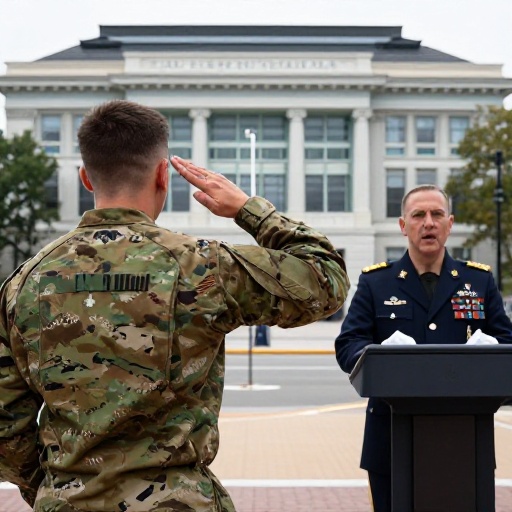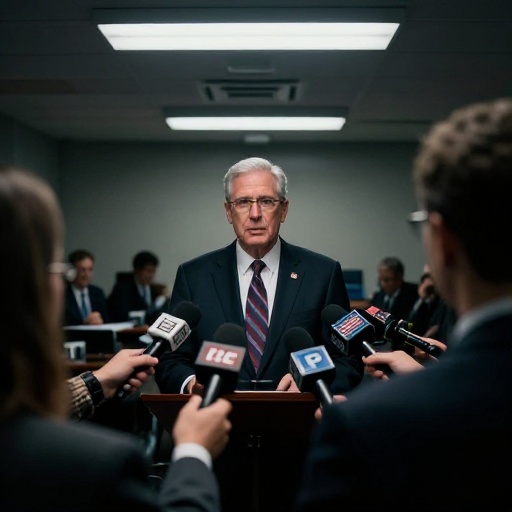
Washington — The recent restructuring within the United States Department of Defense has reignited a longstanding debate regarding the scope of presidential authority over military leadership. At the center of this scrutiny is the exit of Dan Driscoll as Secretary of the Army, an event that many observers view not merely as a personnel change but as a significant maneuver in President Donald Trump’s broader effort to reshape federal agencies.
This development echoes historical precedents where executive branches have utilized high-profile appointments and dismissals to assert greater control over bureaucratic institutions. The current administration’s approach has drawn sharp distinctions between those who view the changes as necessary reforms for efficiency and others who warn of potential destabilization within the armed forces’ command structure.
Historical Precedents in Executive-Military Relations
The controversy surrounding Driscoll’s departure is rooted in a complex history of presidential attempts to influence military affairs. Throughout American history, the balance of power between civilian leadership and professional military officers has been a delicate one. Previous administrations have faced similar criticisms when reshuffling top defense roles.
Political analysts note that such shake-ups often serve dual purposes: aligning departmental heads with specific policy goals and testing the limits of executive oversight. The current administration’s strategy appears consistent with past efforts to streamline decision-making processes by placing loyalists in key positions. However, critics argue this approach risks undermining the institutional knowledge and stability required for national security operations.
The Pentagon has long been a focal point for these power dynamics. As the largest government employer, its leadership structure is critical for implementing defense strategies that span from domestic readiness to international alliances. The recent changes have prompted questions about how such transitions affect ongoing missions and personnel morale across various branches of service, as we reported in Trump Encourages Army Secretary Dan Driscoll to Remain in Post Through Midterm E.
Implications for Defense Policy and Leadership
The departure of Dan Driscoll has left a void in the Army’s civilian leadership, raising concerns among lawmakers about continuity. The role of Secretary of the Army involves overseeing one of the largest military services, managing budgets that exceed hundreds of billions of dollars, and ensuring readiness for global contingencies.
Observers point out that rapid changes at this level can disrupt long-term planning cycles. Defense contracts, recruitment initiatives, and modernization efforts often require years to mature. A sudden shift in leadership may delay these processes or alter their direction based on new political priorities rather than strategic necessity, as we reported in Trump Encourages Army Secretary Dan Driscoll to Remain in Post Through Midterm E.
Furthermore, the announcement has sparked discussions about transparency in government operations. Lawmakers from both parties have expressed interest in understanding the criteria used for such high-level appointments and dismissals. This scrutiny reflects a broader trend of increased legislative oversight over executive actions during periods of significant administrative change, according to BBC.
Balancing Reform with Institutional Stability
Supporters of the Pentagon overhaul argue that fresh leadership is essential for addressing modern challenges, including cyber threats and evolving geopolitical landscapes. They contend that traditional bureaucratic structures may be too rigid to adapt quickly to emerging security risks.
Conversely, military veterans and defense experts emphasize the importance of experienced guidance in maintaining operational effectiveness. The concern is not necessarily about political alignment but rather about preserving the professional standards that have underpinned U.S. military success for decades.
The debate extends beyond immediate personnel changes to fundamental questions about governance. How much discretion should a president have over appointing and removing senior officials? What safeguards exist to prevent politicization of critical defense roles?
As the administration moves forward with its reorganization plans, stakeholders across Washington are watching closely for signs of how these shifts will impact future policy decisions. The outcome may set precedents that influence not only current military operations but also the relationship between civilian leaders and their armed forces in years to come.