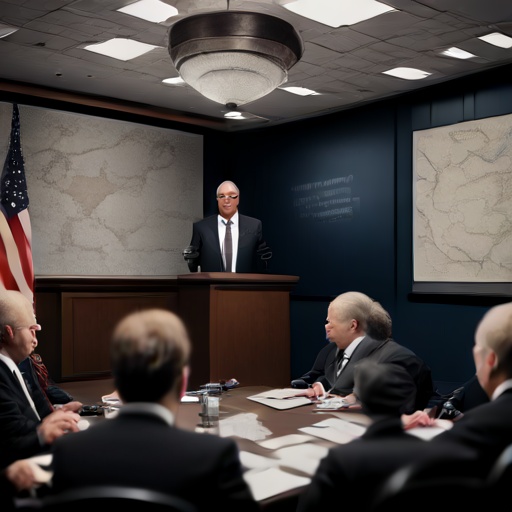
White House Internal Divisions Emerge as Trump Administration Faces Growing Doubts Over Iran Conflict
Reports of 'buyer's remorse' among senior officials signal deepening fractures within the administration over military strategy
A growing rift within the Trump White House has reportedly surfaced as senior administration officials express mounting concerns about the trajectory of the United States' military engagement with Iran, according to reporting from The Daily Beast. The internal discord, described by sources as a case of "buyer's remorse," suggests that key figures in the president's inner circle are questioning whether the escalation was strategically sound or driven by political impulse.
The leak itself — rare in both its specificity and its tone — marks a significant moment in the administration's handling of the conflict, raising questions about unity at the highest levels of American government during a time of active military operations.
Inside the White House Fracture
According to The Daily Beast's reporting, senior White House officials have privately acknowledged that President Trump may have been "high on his own supply" when he authorized the military campaign against Iran. The phrase, attributed to those within the administration, implies that the president's decision-making was influenced more by bravado and internal momentum than by a carefully calibrated strategic assessment.
The characterization is striking in its candor. White House officials rarely speak in such blunt terms about a sitting president's judgment, particularly during an active military conflict. The fact that multiple sources appear willing to share these sentiments with reporters suggests the internal frustration has reached a tipping point.
While the specific identities of the dissenting officials remain unclear, the reporting indicates that the doubts span multiple layers of the administration — from national security advisors to political strategists concerned about the electoral ramifications of a prolonged military engagement in the Middle East.
Strategic Concerns and Escalation Fears
At the heart of the internal debate appears to be a fundamental disagreement over what the endgame looks like. Military operations, once initiated, tend to develop their own momentum, and several officials reportedly fear that the administration lacks a coherent exit strategy or clearly defined objectives beyond the initial strikes.
The concern is not without historical precedent. American military engagements in the Middle East have repeatedly demonstrated how initial operations can spiral into protracted conflicts with unforeseen consequences. The Iraq War, launched in 2003, was initially projected by some administration officials to last weeks or months but ultimately stretched across more than a decade.
Defense analysts outside the administration have echoed similar concerns. The complexity of Iran's military capabilities — including its network of proxy forces across the region, its missile arsenal, and its ability to disrupt global oil supply routes through the Strait of Hormuz — presents a fundamentally different challenge than previous U.S. military campaigns in the region.
"The question is no longer whether this was the right decision — it's whether anyone in the room fully understood what they were signing up for," one Washington defense policy analyst told reporters, speaking on condition of anonymity.
Political Implications in an Election Cycle
The timing of the internal discord is particularly consequential given the political calendar. With the next presidential election cycle already shaping the national conversation, the administration's handling of the Iran situation carries enormous political weight.
Historically, wartime presidents have enjoyed rallying effects in public opinion polls, at least in the short term. However, that dynamic can reverse sharply if the public perceives a conflict as poorly managed, lacking clear purpose, or resulting in significant American casualties. The Vietnam War and the later stages of the Iraq conflict both demonstrated how military engagements can become political liabilities, as we reported in Trump Contradicts Top Advisers on Iran War Strategy Amid Rising Tensions.
Republican allies on Capitol Hill have largely maintained a unified public front in support of the president's actions, but privately, some GOP lawmakers have reportedly expressed unease about the scope and direction of the military operations. Congressional Democrats, meanwhile, have intensified calls for legislative oversight and have questioned whether proper authorization was obtained before operations commenced.
The Significance of the Leak Itself
Perhaps as telling as the content of the leak is its very existence. In any White House, leaks of internal dissent during a military conflict are considered particularly damaging — both to operational security and to the perception of unified command. The willingness of senior officials to share their misgivings with the press suggests that internal channels for dissent may have been exhausted or are viewed as ineffective.
The Trump administration has historically been marked by internal competition and factional disputes, but disagreements over military strategy during active operations represent a qualitatively different kind of division. These are not disputes over messaging or personnel — they are fundamental disagreements about war and peace.
The White House has not issued a formal response to the specific claims reported by The Daily Beast. Previous administration communications have emphasized the president's resolve and characterized the military action as necessary to protect American interests and personnel in the region.
What Comes Next
The coming days and weeks will likely prove critical in determining whether the reported internal divisions harden into genuine policy paralysis or are resolved through a recalibration of strategy. Congressional hearings, diplomatic developments, and the trajectory of military operations on the ground will all shape the political landscape.
For Florida, a state with significant military installations, a large veteran population, and deep economic ties to defense contracting, the conflict's evolution carries particular resonance. Bases from Jacksonville to Tampa to the Panhandle remain integral to U.S. force projection, and any escalation would have direct implications for military families across the state.
As the situation develops, the question at the center of this White House drama remains unanswered: Is there a plan for what comes after the first shots, or was the decision to strike made without one?