Trump Claims He Was 'An Hour Away' From Striking Iran
President halts planned attack on Gulf allies' request as Senate advances war powers resolution and global tensions rise.
President Donald Trump stated on Wednesday that he was "an hour away" from ordering new military strikes against Iran but ultimately scrapped the plan at the request of Persian Gulf allies. The announcement comes as "serious negotiations" for a potential peace deal are underway, with Iran recently conveying an amended set of terms for a ceasefire. Trump described the ongoing conflict as "very popular" and noted he does not have "enough time" to continually explain the rationale for the war to the public.
Senate Advances War Powers Resolution
In a significant legislative development, the U.S. Senate advanced a resolution to limit the president's war powers regarding Iran on Tuesday. The measure passed via a motion to discharge the resolution from committee in a 50-to-47 vote. This marks the first time the Senate has advanced such a resolution after seven previous failed attempts. Four Republicans—Sens. Susan Collins, Lisa Murkowski, Rand Paul, and Bill Cassidy—joined the majority of Democrats in support. Sen. John Fetterman was the sole Democrat to oppose the motion. While the president is expected to veto any final bill, Democrats argue the move carries political significance.
Strait of Hormuz and Global Reactions
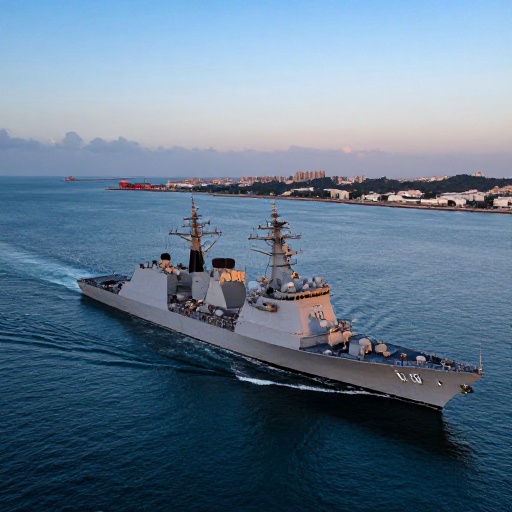
Amidst the diplomatic maneuvering, commercial shipping continued through the Strait of Hormuz, a vital oil transit lane largely under Iranian control since hostilities began. A South Korean oil tanker, the Universal Win, was observed passing through the strait on Wednesday, bound for Ulsan after departing Kuwait. This movement follows weeks of heightened concern after a South Korean-operated vessel was hit by airborne objects in the area. Separately, two Chinese oil-filled tankers also departed the strait, fueling hopes that a peace agreement might be nearing completion, a story we covered in Trump Says U.S. Paused Attacks on Iran at Tehran's Request.
U.S. officials confirmed that American forces identified at least 10 mines in the Strait of Hormuz, according to intelligence assessments. The Pentagon has warned that transiting normal routes is "extremely hazardous" due to Iranian-laid mines, directing commercial ships toward cleared routes farther from Iranian territory. Vice President JD Vance justified the military posture by resurrecting the Cold War-era "domino theory," stating that Iran would be the "first domino" in a global race for nuclear weapons if its ambitions are not stopped.
Regional Escalation and Activist Flotilla
Tensions remain high across the Middle East. Israel launched strikes across Lebanon on Tuesday, while Hezbollah reported attacks against Israeli forces. Lebanese officials state the conflict has killed more than 3,000 people despite a U.S.-brokered ceasefire. Additionally, Israeli forces intercepted the remaining vessels of the Global Sumud Flotilla, an activist group attempting to challenge Israel's naval blockade of Gaza. Israeli soldiers boarded the vessels and destroyed cameras, with Israel stating that only non-lethal means were used. Chinese President Xi Jinping called for a "comprehensive" ceasefire in discussions with Russian President Vladimir Putin, labeling further hostilities as "inadvisable."