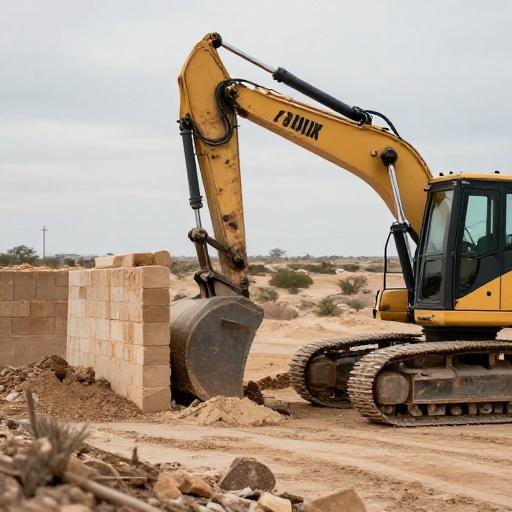
WASHINGTON — The Trump administration has initiated construction activities along the U.S.-Mexico border in West Texas’ Big Bend region, marking a significant escalation in efforts to secure the nation’s southern boundary. According to reports from HuffPost, Customs and Border Protection (CBP) agents have begun work on new barriers in an area that many residents argue is not a primary corridor for illegal immigration.
Construction Begins Amidst Local Opposition
Federal officials confirmed the start of construction projects within Big Bend National Park and adjacent private lands. The initiative aligns with broader administration goals to restrict unauthorized crossings through physical infrastructure rather than relying solely on personnel or technology. However, the rollout has encountered immediate resistance from a coalition of local stakeholders.
Landowners in the region have expressed deep concern over property rights and environmental impacts. Ranchers who utilize these remote areas for livestock grazing argue that new barriers will disrupt traditional land use patterns without providing proportional security benefits. Environmental groups have also joined the opposition, warning that construction could damage fragile ecosystems unique to the Chihuahuan Desert.
"The Big Bend region is not a high-traffic area for illegal immigration," stated one local business owner who requested anonymity due to ongoing legal threats from federal agencies. "We are seeing resources diverted to areas where they may have less impact, while ignoring more porous sectors of the border, more context in Federal Panel Reviews Trump's Lafayette Park Fence Plan."
Strategic Shift in Border Security Policy
This development represents a strategic pivot by the Trump administration, which has previously focused on high-traffic urban corridors such as El Paso and Rio Grande Valley. By expanding operations into Big Bend, federal authorities aim to close perceived gaps in surveillance coverage, as noted by AP News.
CBP officials argue that even low-volume crossing points can be exploited by drug trafficking organizations and human smuggling rings. The agency contends that physical barriers serve as both a deterrent and an operational tool for detecting intrusions before they cross into the United States, as we reported in Federal Panel Reviews Trump's Lafayette Park Fence Plan.
The administration maintains that securing every mile of the southern border is essential to national safety, regardless of current traffic statistics in specific sectors.
Legal challenges are expected to follow. Several nonprofit organizations representing environmental interests have already filed preliminary objections regarding permits issued for construction equipment access across federal lands within the park boundaries.
Economic and Environmental Implications
The Big Bend region relies heavily on tourism, with visitors drawn by its rugged landscapes and biodiversity. Local economic advocates fear that increased militarization of the area could deter tourists, impacting small businesses in nearby towns like Marfa and Alpine.
Environmental scientists have highlighted risks to endangered species such as the ocelot and black bear. Construction noise and habitat fragmentation are cited as primary concerns by conservationists monitoring the project’s progress.