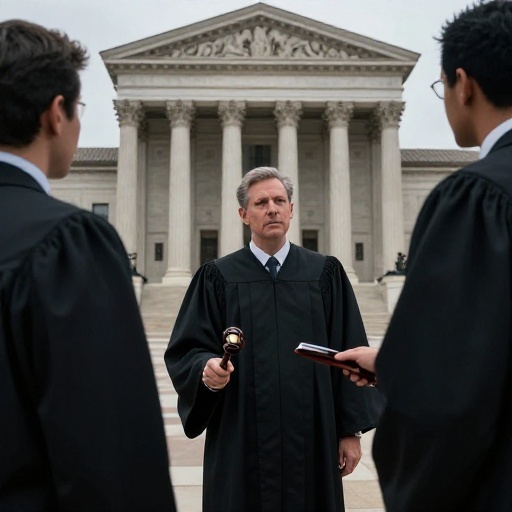
For years, a specific district court in North Texas has served as the preferred battleground for conservative litigants seeking to roll back federal regulations. Now, that same courtroom is becoming the central hub for President Donald Trump’s Justice Department to challenge existing policies and reshape American law.
The Northern District of Texas, particularly through the bench of U.S. District Judge Reed O’Connor, has emerged as a critical node in the national legal landscape. This shift marks a significant evolution from its previous role as a haven for private conservative lawsuits to an active partner with federal enforcement agencies under a second Trump administration.
A History of Conservative Litigation
Judge O’Connor has long been recognized by civil liberties groups and legal scholars as one of the most ideologically consistent judges in the country. His rulings have frequently favored conservative interpretations of administrative law, making his court a natural destination for organizations opposed to expansive federal agency powers.
In recent years, this district became known for handling high-profile cases involving environmental regulations, healthcare mandates, and labor rules. Litigants found that O’Connor was willing to issue broad injunctions against federal agencies, often halting policies before they could be fully implemented or challenged through traditional administrative appeals.
This reputation attracted a steady stream of plaintiffs from across the political spectrum who aligned with judicial conservatism. The volume and nature of these cases established Northern Texas as a strategic focal point for anyone looking to disrupt the status quo of federal governance.
The Justice Department’s Strategic Shift
Under President Trump, the U.S. Department of Justice has adopted a similar legal strategy. Rather than relying solely on legislative changes or executive orders, which can face immediate judicial scrutiny or reversal by incoming administrations, the DOJ is utilizing federal courts to dismantle regulatory frameworks.
This approach allows for detailed legal arguments that challenge the very authority of agencies like the Environmental Protection Agency (EPA) and the Department of Education. By filing suits in districts known for sympathetic judges, the administration increases the likelihood of favorable rulings that can set precedent nationwide.
The convergence of private conservative litigants and federal government attorneys creates a powerful legal engine. Cases filed by both groups often target overlapping regulations, creating a double pressure on agencies to defend their authority or face immediate injunctions.
Implications for Federal Governance
This trend raises significant questions about the balance of power between the judiciary and the executive branch. When federal courts become primary venues for policy reversal, it shifts the locus of political decision-making from elected officials to appointed judges.
Critics argue that this strategy undermines democratic accountability by allowing unelected judges to effectively veto policies passed by Congress or issued by presidential agencies. They contend that such an approach bypasses established administrative procedures designed to ensure thorough review and public input.
Supporters, however, view these legal challenges as necessary checks on bureaucratic overreach. They argue that federal agencies have expanded their power beyond congressional intent, requiring judicial intervention to restore constitutional limits on government authority.
National Impact of Local Rulings
The rulings from Northern Texas often carry weight far beyond the state’s borders. Injunctions issued by Judge O’Connor frequently apply nationwide, affecting industries and citizens across all 50 states.
This extraterritorial effect amplifies the influence of a single district court. When a major policy is halted in Texas, it creates immediate uncertainty for businesses and state governments operating under federal guidelines elsewhere.
As Trump’s agenda continues to evolve, the reliance on this specific legal pathway suggests that future policy shifts will be heavily dependent on judicial outcomes rather than legislative processes alone. The Northern District of Texas may well remain a central stage in defining the scope of presidential power for years to come.