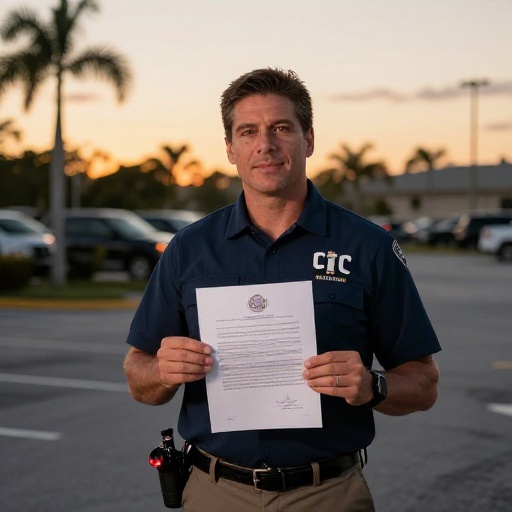
The Florida Department of Transportation (FDOT) has issued a directive requiring the removal of automated license plate reader cameras from state highway systems. The one-page memorandum, signed by FDOT Assistant Secretary Will Watts, mandates that agencies under the department remove these devices or have them taken down within 30 days. This administrative action marks a significant shift in how the state handles surveillance technology on public infrastructure.
Scope of the Memo and Legal Authority
The memo specifically targets cameras located "within the right of way of a road on the State Highway System." It does not explicitly address devices installed by local police departments or those situated on private property. The document states that active permits for camera placement are considered temporary and are hereby revoked to preserve Floridians' sovereignty and quality of life. This administrative order provides a mechanism for removal without requiring immediate legislative approval, although Governor Ron DeSantis previously noted that the Florida State Legislature would need to approve broader actions to eliminate license plate readers (LPRs) entirely.
Political Context and Privacy Concerns
The directive follows heightened scrutiny of surveillance tools used by law enforcement. The memo cites "concerning reports of misuse, data privacy concerns, and surveillance schemes" as the basis for immediate action. This aligns with recent statements from Governor DeSantis, who described license plate readers as being "out of control." Additionally, Florida Representative Greg Steube has publicly criticized the ability of law enforcement to monitor citizen movements, comparing such surveillance capabilities unfavorably to authoritarian regimes, as this newspaper reported in DeSantis Proposes Restrictions on Florida’s Automated License Plate Reader Camer.
Law Enforcement Response and Industry Reaction
The impact on local agencies remains uncertain. T.K. Waters, Sheriff of Jacksonville, indicated he plans to honor the spirit of the memo despite viewing LPRs as valuable investigative tools. He cited community concerns in his decision to discontinue use at this time. Meanwhile, Flock Technology responded by emphasizing its role in public safety, citing recent successes in finding missing children and solving crimes. The company supports "thoughtful legislation" with strong privacy guardrails rather than a total ban.