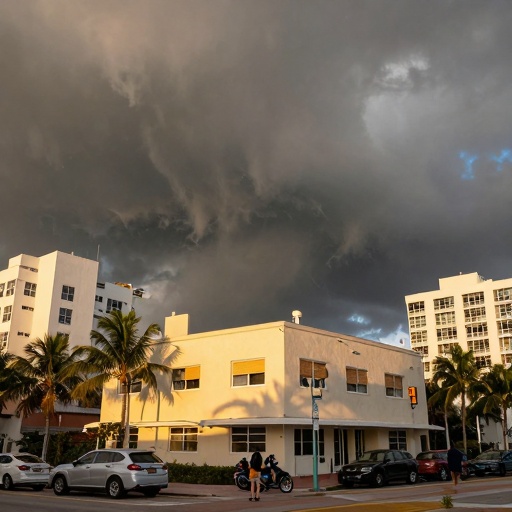
Florida Hurricane Forecast: Below-Average Activity Expected for 2026
NOAA and Colorado State University predict fewer storms due to El Niño, but officials urge residents to maintain preparedness plans.
The Atlantic hurricane season for 2026 is predicted to feature below-average activity, according to updated forecasts from the National Oceanic and Atmospheric Administration (NOAA) and Colorado State University. Released on August 5, these outlooks attribute the quieter forecast primarily to strong El Niño conditions that are suppressing storm development across the tropical Atlantic. Despite the expectation of a slower season, officials emphasize that Florida remains the state most likely to be impacted by storms in 2026 among those listed by Colorado State University.
Forecast Details and Statistical Projections
The latest NOAA forecast predicts between seven and 13 named storms for the upcoming season, a slight decrease from the May projection of eight to 14. The agency also anticipates two to six hurricanes, with up to two major hurricanes reaching Category 3 status or higher. Colorado State University has similarly adjusted its predictions downward throughout the summer, dropping its hurricane count from six in April to four by August.
For context, an average season based on data between 1991 and 2020 includes 14 named storms, seven hurricanes, and three major hurricanes. In contrast, the previous year saw no hurricanes make landfall in the continental United States for the first time since 2015.
The Role of El Niño in Storm Suppression
El Niño is identified as a dominant factor in limiting Atlantic hurricane activity. The phenomenon increases wind shear across the tropical Atlantic, which tears developing storms apart or prevents them from organizing. Additionally, slightly warmer-than-average sea surface temperatures and persistent dry air spreading from the Sahara Desert are further suppressing thunderstorm development, a story we covered in Florida Hurricane Outlook.
"When El Niño emerges, it usually becomes the dominant factor in total hurricane season activity, and this El Niño continues to get stronger every month," said Matt Rosencrans, lead hurricane season forecaster with NOAA’s National Weather Service. "Compared to a mature El Niño, other mechanisms play a smaller role in determining the number and intensity of tropical storms in the Atlantic basin."
Preparedness Remains Critical for Florida Residents
A below-normal forecast does not guarantee safety from individual destructive storms. Colorado State University forecasters predict that Florida faces a 44% chance of a named storm passing within 50 miles of the state in 2026. The Atlantic hurricane season officially runs from June 1 through November 30, with peak activity occurring between mid-August and mid-October.
Officials stress that seasonal outlooks reflect large-scale climate patterns rather than specific landfall predictions. Residents are advised to review their preparedness plans immediately. As noted by forecasters, it only takes one storm to cause significant damage, making early preparation essential for protecting homes and families throughout the season.