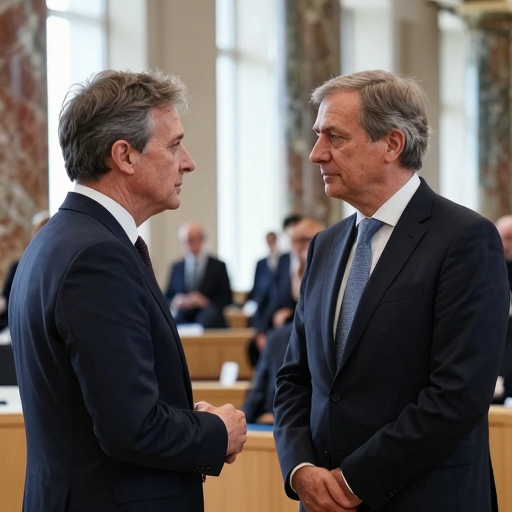
The European Union has announced new sanctions targeting Arkady Dvorkovich, the current President of the International Chess Federation (FIDE) and a former Deputy Prime Minister of Russia. The measures include a strict travel ban across EU member states and an immediate freeze on his assets held within the bloc's jurisdiction. This decision marks a significant escalation in Brussels' efforts to isolate key figures associated with the Russian government following its military actions.
Background on Dvorkovich’s Political Career
Dvorkovich served as Deputy Prime Minister of Russia from 2018 until his resignation in July 2020. During his tenure, he was responsible for overseeing digital development and telecommunications sectors within the Russian Federation. His transition to leading FIDE occurred after leaving public office, yet his previous high-ranking position has now drawn renewed scrutiny from European policymakers.
Implications of EU Travel Bans
The travel ban prohibits Dvorkovich from entering or transiting through any country belonging to the European Union. Additionally, all funds and economic resources owned by him within the EU are frozen, preventing access to financial markets in member states such as Germany, France, Italy, and Spain. These restrictions align with broader EU strategies aimed at penalizing individuals linked to Russian state structures.
Context of Broader Russia Sanctions
This action is part of a wider package of measures introduced by the European Union in response to ongoing conflicts involving Russia. The bloc has consistently targeted political leaders, business oligarchs, and cultural figures who are perceived as supporting or benefiting from state policies under investigation. Dvorkovich’s inclusion reflects the EU's expanding scope beyond traditional military and energy sectors, as this newspaper reported in Trump Warns FIFA of Consequences If It Ousts President Infantino.
Impact on FIDE Governance
The sanctions raise questions regarding potential disruptions to international chess events hosted in Europe, though no direct operational changes have been reported by FIDE officials. The organization continues to operate independently from national governments, but its leadership’s legal status may complicate administrative processes involving European partners.