Dana White Defends Trump Against Racism Claims in New Yorker Interview
UFC president cites Trump's past friendship with Michael Jackson to refute allegations of prejudice, drawing sharp pushback from interviewer David Remnick.
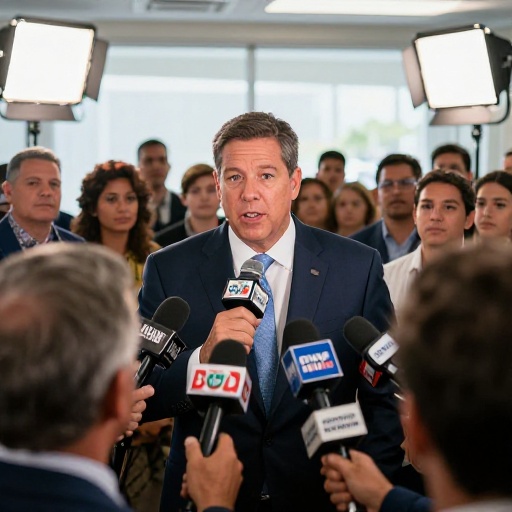
In a recent podcast interview published on May 22 with The New Yorker editor David Remnick, UFC President Dana White offered a controversial defense of President Donald Trump, asserting that the former president cannot be classified as racist. White, a long-time ally of Trump and a close personal friend, relied on the late pop icon Michael Jackson as the primary evidence for his claim. The interview, which has drawn significant attention for its tense dynamic, highlights the deep divisions in how political rhetoric and historical relationships are interpreted in contemporary American discourse.
The Michael Jackson Argument
White’s central argument hinges on Trump’s historical relationship with Michael Jackson, one of the most famous Black entertainers in history. White stated that Trump frequently had Jackson around his children and family, and that the former president defended Jackson during periods of intense public scrutiny. “Donald Trump, all this stuff’s coming out now,” White said, referencing recent media coverage. “You know, the ‘Michael’ movie just came out, and you see all these videos now popping up of Trump defending Michael Jackson and the type of person that he was, and that Michael Jackson was around his children and around his family a lot.” White concluded that these interactions made accusations of racism “crazy.”
Remnick’s Pushback on Jackson’s Legacy
Remnick challenged White’s premise by pointing out the complex and troubled nature of Jackson’s personal life. The interviewer noted that Jackson was a “deeply, deeply flawed human being” and referenced the serious allegations of abuse that surrounded him. “And was abusive [from] everything we know about him,” Remnick said. White acknowledged Jackson’s flaws but questioned the extent of the abuse, particularly regarding children. Remnick clarified that the abuse referred to allegations involving minors, noting that Jackson was acquitted in a 2005 criminal trial but maintained his innocence until his death in 2009. The exchange underscored a fundamental disagreement on how past associations should be weighed against current political behavior.
Confrontation Over Rhetoric and Imagery
The conversation grew more heated when Remnick addressed Trump’s past social media posts, specifically a video depicting former President Barack Obama and former First Lady Michelle Obama as apes. Remnick asked White if such imagery gave him pause, suggesting it might indicate a prejudiced mindset. White responded by stating that he would not associate with someone who held such views, implying that Trump’s actions did not reflect that character. “If he was that type of person, I never would associate with that type of a person, no matter who he was,” White argued. When Remnick pressed further, asking how Trump could engage in such rhetoric without being “that kind of person,” White doubled down, simply stating, “he’s not, more context in Trump Attacks Female Reporter Over Voting Reform Questions.”
White also dismissed the broader narrative of racism surrounding Trump as a political construct pushed by Democrats. He characterized the negative rhetoric as coming from “politics” rather than from Trump’s actual behavior or speech. Remnick countered that the criticism stemmed from Trump’s own rhetoric and the way he treated people. White acknowledged that Trump was a “tough guy” who was unafraid to give his opinion but maintained that the accusations of racism were baseless. The interview illustrates the starkly different frameworks through which allies and critics view Trump’s legacy and conduct.