Cuba Receives 300 Military Drones Amid Florida Security Concerns
Classified intelligence indicates Havana is acquiring drones with potential targets including Guantanamo Bay and Key West.
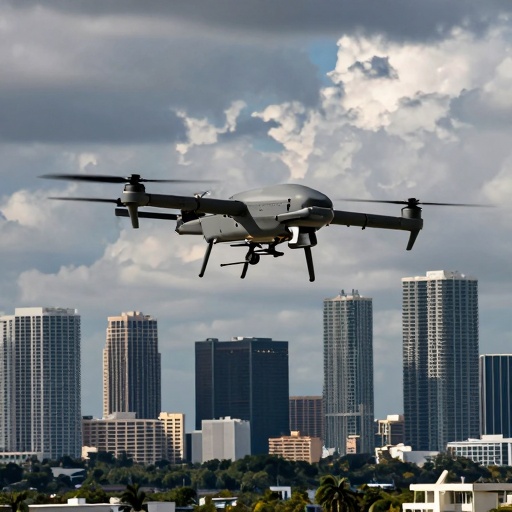
Classified intelligence reports indicate that Cuban officials have acquired 300 military drones, raising significant security concerns for the United States. According to the disclosed information, government officials in Havana have discussed potential attacks on U.S. military installations and civilian areas. The intelligence specifically highlights threats directed at the U.S. naval base at Guantanamo Bay and Key West, Florida, which is located approximately 90 miles north of Havana.
Intelligence Details and Strategic Targets
The revelation stems from classified assessments that detail the scale of the drone acquisition and the strategic intent behind it. The acquisition of 300 units represents a substantial increase in aerial capabilities for the Cuban military. The intelligence suggests that these drones are not merely for defensive purposes but are being evaluated for offensive operations against American interests in the region.
Key West, a prominent tourist destination and strategic point in the Florida Keys, is cited as a specific target. Its proximity to Cuba makes it a logical focal point for any aerial threat assessment. The distance of 90 miles is well within the operational range of many modern military drones, allowing for rapid deployment and potential strike capabilities without requiring long-range ballistic missiles, as reported by Orlando Ledger.
Implications for Guantanamo Bay
Guantanamo Bay, the U.S. naval base in Cuba, remains a persistent point of tension between the two nations. The intelligence indicates that this facility is a primary objective in the discussions held by Cuban officials. The base has been a subject of diplomatic friction for decades, and the introduction of drone technology adds a new dimension to the security dynamics in the Caribbean.
The presence of the U.S. base in Cuban territory has long been a source of contention. The potential use of drones to target this installation suggests an escalation in the type of threats posed by the Cuban government. Security protocols at the base may need to be reviewed in light of these new aerial capabilities, Fox News reported.
Regional Security and Response
The acquisition of such a large number of drones by Cuba has implications for regional security in the Caribbean and the southeastern United States. Florida, which shares a maritime border with Cuba, is particularly vulnerable to such threats. The state's economy, heavily reliant on tourism and military presence, could be impacted by heightened security measures or potential incidents, more context in Small Plane Emergency Landing on Florida Interstate Sparks FAA Investigation.
U.S. authorities are likely to monitor the situation closely. The intelligence community will continue to assess the threat level posed by these drones and the intent of the Cuban government. Diplomatic channels may be utilized to address these concerns, although historical relations between the two countries suggest that dialogue may be limited.
The situation underscores the ongoing complexity of U.S.-Cuba relations. While the acquisition of military hardware is a sovereign right, the specific targeting of U.S. interests raises alarms in Washington. The focus now shifts to how the U.S. government will respond to these intelligence findings and what measures will be taken to protect American personnel and infrastructure in the region.