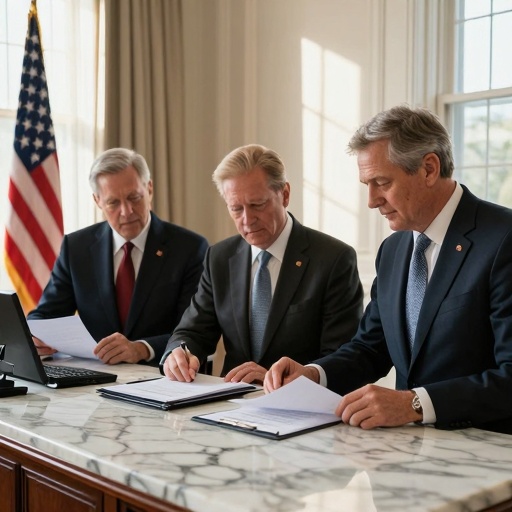
Bessent Announces 'Operation Economic Outcast' Against Iran
US Treasury Secretary calls for global isolation of Tehran as Trump escalates trade tensions with Canada.
Washington — U.S. Treasury Secretary Scott Bessent has officially announced a new diplomatic and economic initiative titled "Operation Economic Outcast," aimed at isolating the Islamic Republic of Iran on the global stage. The announcement, made during a briefing focused on international financial strategy, signals an intensified effort by the Trump administration to leverage economic pressure against Tehran’s regional activities.
Details of the New Initiative
In his statement regarding "Operation Economic Outcast," Bessent called upon world leaders to "cease their interactions" with Iran. The directive appears designed to restrict financial, commercial, and diplomatic ties that sustain Tehran’s economy. However, the Treasury Secretary did not provide a specific list of countries targeted by this call for isolation, nor did he establish concrete deadlines for compliance.
The lack of named entities or temporal boundaries in Bessent's announcement leaves the operational scope open to interpretation by international partners and domestic agencies alike. The strategy relies heavily on voluntary cooperation from allied nations rather than unilateral U.S. sanctions enforcement mechanisms typically associated with executive orders. This approach suggests a diplomatic offensive intended to build consensus against Iranian economic engagement before potential legislative or regulatory actions follow.
Broader Geopolitical Context
This announcement comes at a time of heightened tension in North American trade relations as well. The Trump administration has simultaneously escalated its trade war with Canada, creating a complex backdrop for U.S. foreign policy communications. While the Canadian dispute focuses on tariffs and border security agreements, the Iran initiative targets Middle Eastern geopolitical stability through economic exclusion, more context in Economic Pressure on Iran Could Trigger Military Escalation, Expert Warns.
Observers note that "Operation Economic Outcast" represents a rhetorical shift toward comprehensive isolationism rather than targeted sanctions against specific individuals or entities previously listed by the Office of Foreign Assets Control (OFAC). By framing the issue as a collective responsibility for world leaders, Bessent attempts to frame non-cooperation with Iran as a moral and economic imperative.
Implications for Global Markets
The announcement has immediate implications for global energy markets and diplomatic channels. Without specific deadlines or named countries, the burden of implementation falls on individual nations’ foreign ministries and financial regulators to assess their existing ties with Tehran. This ambiguity may lead to varied interpretations across different regions, potentially creating friction in multilateral forums where consensus is required, El País reported.
As the administration navigates these dual fronts—economic pressure on Iran and trade disputes with Canada—the White House faces scrutiny over how it balances aggressive diplomatic posturing with practical economic outcomes. The success of "Operation Economic Outcast" will likely depend on subsequent executive actions or legislative support that clarifies the vague parameters initially presented by Bessent.