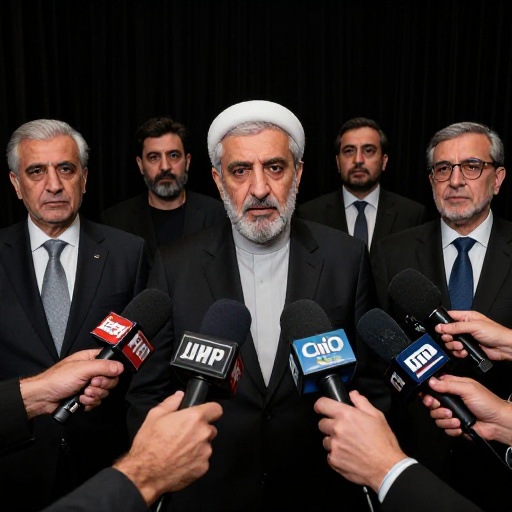
Economic Pressure on Iran Could Trigger Military Escalation, Expert Warns
Washington’s continued reliance on aggressive economic statecraft against Tehran has raised alarms among regional analysts who warn of a potential security crisis. According to a recent assessment by Newsweek, an Iranian expert cautioned that if Washington pushes Iran's economy into a "truly critical" condition, the Islamic Republic may respond with major military escalation.
The warning underscores the fragile balance in Middle Eastern geopolitics as U.S. policy under former President Donald Trump’s influence continues to emphasize maximum pressure campaigns. While economic sanctions have historically been used as tools of diplomatic leverage, experts suggest that crossing certain financial thresholds could provoke unintended and dangerous consequences for regional stability.
The Limits of Economic Coercion
U.S. foreign policy has long utilized trade restrictions and asset freezes to curb Iran’s nuclear program and its support for proxy groups across the Middle East. However, the recent commentary highlights a growing concern among international observers: that economic strangulation may not yield political concessions but rather drive adversarial states toward military options.
Iranian officials have frequently cited sanctions as existential threats to their national economy. The expert quoted by Newsweek did not specify exact metrics for "critical" conditions, such as specific inflation rates or oil export volumes, but implied that the cumulative effect of U.S.-led financial isolation is reaching a breaking point.
Historical precedents suggest that when diplomatic channels are severed and economic pain becomes acute, state actors may resort to asymmetric warfare. This includes attacks on shipping lanes, cyber operations against critical infrastructure, or direct confrontations with U.S. forces in the region. The potential for miscalculation increases as both sides engage in rhetorical posturing without clear off-ramps.
Regional Implications and Security Risks
The Middle East remains a volatile theater where economic disputes often translate into kinetic conflicts. Iran’s network of allied militias in Iraq, Syria, Lebanon, and Yemen adds complexity to any potential escalation. A direct military response from Tehran could involve coordinated strikes on American interests or allies such as Israel and Saudi Arabia.
Security analysts warn that the region lacks robust crisis communication mechanisms compared to other global hotspots. The absence of direct dialogue between Washington and Tehran since 2018 has removed a key channel for de-escalation during periods of heightened tension, more context in U.S. Economic Pressure on Iran Faces Complex Geopolitical Challenges.
The potential for broader conflict extends beyond immediate military engagements. Disruptions in oil supplies through the Strait of Hormuz could trigger global economic shocks, affecting energy prices worldwide. This interconnection between regional security and global markets makes the situation particularly sensitive to international audiences.
Political Context in Washington
The current political landscape in the United States continues to reflect deep divisions over how best to handle Iran. While some policymakers advocate for renewed diplomatic engagement, others argue that only sustained pressure can prevent Tehran from acquiring nuclear weapons, a story we covered in Iran’s Economy Collapses Under Sanctions as Trump Returns to Power.
Former President Donald Trump’s administration previously withdrew from the Joint Comprehensive Plan of Action (JCPOA) in 2018 and reimposed stringent sanctions. This approach was designed to isolate Iran economically but has been criticized for failing to curb its regional activities.
The recent warnings suggest that even within the U.S. foreign policy establishment, there is growing awareness that economic tools have limits. The risk of unintended escalation requires careful calibration of sanctions regimes and clear communication of red lines.
"If the economic situation becomes truly critical," an Iranian expert told Newsweek, "the answer may be major military escalation."
This statement serves as a stark reminder that economic warfare is not conducted in a vacuum. The decisions made in Washington have direct repercussions on the ground in Tehran and throughout the Middle East.
Looking Ahead: Diplomacy or Confrontation?
As tensions persist, international observers are watching for signs of diplomatic openings or further military posturing. The coming months will likely test whether economic pressure can be maintained without triggering a broader conflict, as noted by El País.
The Biden administration has faced challenges in balancing sanctions enforcement with efforts to prevent regional war. Meanwhile, Iran continues to navigate its domestic economic struggles while projecting strength abroad.
For Florida and other U.S. states connected to global trade, the stability of Middle Eastern shipping lanes remains a critical concern. Any disruption in energy flows or insurance markets could have tangible effects on local economies.
The expert’s warning underscores the need for nuanced policy approaches that account for both economic objectives and security risks. As the situation evolves, the international community will be keenly interested in how Washington responds to Iran’s red lines and whether diplomatic channels can be reopened before military options become unavoidable.