Trump Rejects Iran's Strait of Hormuz Reopening Plan Amidst Escalating Tensions
President Trump dismisses Tehran's proposal to restart nuclear talks, while Treasury Secretary Scott Bessent highlights new economic isolation efforts targeting Iranian banks and airlines.
President Trump announced on Saturday that he has rejected the latest proposal from Tehran to reopen the strategically vital Strait of Hormuz and restart negotiations regarding Iran's nuclear program. The dismissal comes as Iranian President Masoud Pezeshkian stated in an interview with CBS News that, despite an "atmosphere of distrust," his country is willing to allow United Nations nuclear inspectors back into the nation as part of a potential long-term ceasefire agreement.
Economic Isolation Efforts Intensify
Treasury Secretary Scott Bessent highlighted the administration's ongoing campaign to economically isolate Iran, describing "Operation Economic Outcast" as delivering tangible results. Bessent reported that envoys have been dispatched globally to pressure nations into halting economic ties with Tehran. He noted specifically that Turkey and Oman have ceased incoming flights from private carrier Mahan Air, while the United Arab Emirates has stopped all flights by Iranian airlines.
Further financial restrictions were also detailed by Bessent. The UAE central bank recently blocked transactions involving branches of Iran's Bank Melli, citing violations related to money laundering and arms proliferation. Additionally, Turkey revoked the license of Iran's Bank Mellat last week. These measures are part of a broader strategy that expanded secondary sanctions across sectors including digital assets, gold, aviation, technology, and shipping.
Diplomatic Tensions at the United Nations
Amidst these developments, diplomatic efforts continued at the U.N. General Assembly in New York. Saudi Foreign Minister Faisal bin Farhan warned member states that attempts to block Middle East waterways pose a severe threat to global energy security. He demanded that the international community guarantee freedom of navigation and restore conditions in the Strait of Hormuz to pre-war levels without imposing new fees, more context in Trump Posts Map Labeling Hormuz Strait as 'Trump Strait'.
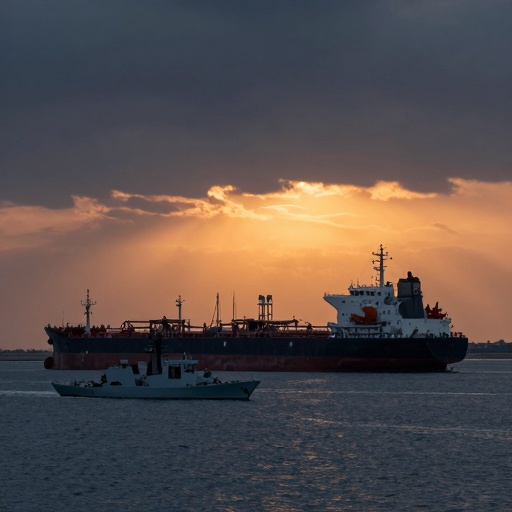
Omani Foreign Minister Badr Albusaidi also addressed world leaders, calling for self-restraint and dialogue from all parties involved in the Middle East conflict. Oman reaffirmed its commitment to mediating efforts aimed at safeguarding navigation through the Strait of Hormuz, where ships are currently taking routes hugging the Omani coast to skirt Iranian restrictions, more context in Trump Mulls More Strikes on Iran After Tanker Attacks in Strait of Hormuz.
Global Energy Market Reactions
The geopolitical instability has significantly impacted global energy supplies. The White House confirmed that President Trump urged Chinese counterpart Xi Jinping during a recent meeting to increase petroleum production to stabilize supply chains. Despite U.S. military efforts escorting 29 vessels out of the Strait, oil and natural gas supplies remain below prewar levels, as reported by RTVE.
Brent crude closed the week at $104 per barrel, reflecting the ongoing volatility caused by the conflict spreading from Iran to Saudi Arabia and the closure of the Bab el-Mandeb Strait by Houthi militia attacks. Meanwhile, Russian Foreign Minister Sergei Lavrov stated that Russia is ready to assist in stabilizing the region, though he did not elaborate on specific methods of assistance.