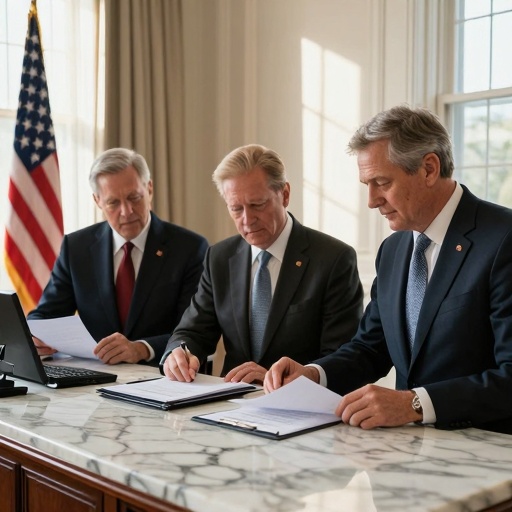
Trump Outlines Initial War Aims Against Iran Amid Escalating Tensions
Analysis of President Trump's stated objectives at the onset of U.S.-Iran conflict and subsequent shifts in rhetoric by his administration.
When the conflict between the United States and Iran escalated into open hostilities, President Donald Trump established a comprehensive set of aggressive objectives. These initial goals were designed to dismantle Iranian nuclear capabilities and curb regional influence through direct military pressure. The administration’s early stance was characterized by uncompromising demands for total compliance with U.S. security interests in the Persian Gulf region.
Initial Strategic Objectives
The original war aims laid out at the beginning of the conflict focused on immediate de-escalation through strength. Key targets included neutralizing Iran’s ballistic missile programs and restricting its naval activities in strategic waterways such as the Strait of Hormuz. The White House emphasized that any failure to meet these conditions would result in sustained military engagement.
Top aides reinforced this narrative, framing the conflict not merely as a defensive measure but as a proactive effort to prevent future threats from emerging nuclear powers. Official statements highlighted the necessity of regime accountability for attacks on American assets and allies throughout the Middle East.
Evolving Rhetoric and Current Stance
As hostilities continued, public commentary from President Trump and his senior staff has shown noticeable shifts in tone and focus. While the core demand for Iranian disarmament remains unchanged, recent statements have placed greater emphasis on diplomatic off-ramps to avoid prolonged regional instability.
The administration acknowledges that while military readiness is non-negotiable, long-term stability requires a clear path toward negotiated settlements rather than endless engagement.
This adjustment in messaging does not indicate a retreat from previous demands but reflects strategic recalibration. Officials argue that maintaining international coalition support and managing domestic economic impacts require balancing coercive diplomacy with open channels for negotiation, a story we covered in Trump Revises Strategy on Iran as Economic Pressure Tactics Shift.
Implications for Regional Stability
The divergence between initial war aims and current public statements highlights the complexity of modern geopolitical conflicts. Analysts note that such shifts often serve to keep adversaries uncertain while preserving flexibility for future diplomatic maneuvers.
For now, the U.S. position remains firm on core security principles but more nuanced in its approach to resolution. The administration continues to monitor Iranian responses closely, ready to adjust tactics based on Tehran’s actions rather than solely relying on pre-conflict declarations.