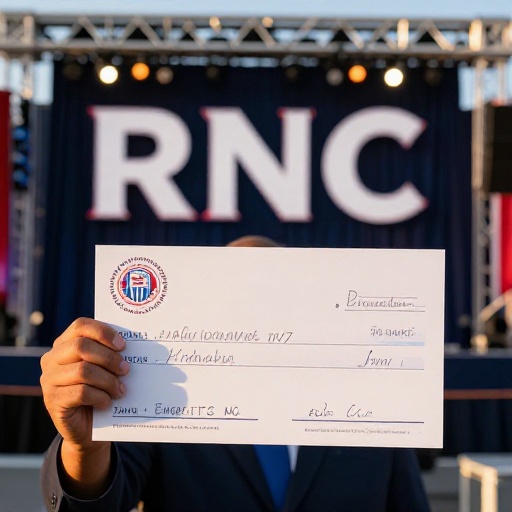
President Donald Trump has firmly defended his proposal for a direct $5,000 dividend to American citizens, characterizing the payment not as an election-year inducement but as a legitimate reward for national economic growth. Speaking during a press briefing at Mar-a-Lago on Thursday, Trump rejected media narratives suggesting the policy was designed primarily to boost voter turnout in upcoming primaries.
"This is about rewarding hard work and celebrating American prosperity," Trump stated. "When our economy grows, people should feel it directly in their pockets." He emphasized that the dividend represents a return on investment for taxpayers who have supported policies fostering industrial expansion and energy independence over his previous term.
Economic Rationale Over Political Strategy
The former president argued that the funding mechanism for such dividends relies heavily on increased tax revenues generated by corporate profits and individual income growth. He cited data from the Bureau of Economic Analysis indicating a sustained rise in Gross Domestic Product during periods of deregulation.
"We are not printing money out of thin air," Trump asserted. "We are redistributing wealth that was created through smart policy decisions." Critics, however, point to Congressional Budget Office projections suggesting significant deficits without corresponding spending cuts or new revenue streams beyond corporate tax reforms.
Bipartisan Reaction and Fiscal Scrutiny
Lawmakers in Washington have responded with mixed reactions. Senate Finance Committee Chair Mike Crapo (R-ID) expressed cautious optimism, noting that direct payments could stimulate consumer spending if structured carefully within the federal budget framework.
Conversely, House Budget Committee Chairman Jim Jordan (R-OH) warned against unfunded mandates. "We cannot promise checks we cannot write," Jordan said in a statement released Friday morning. He called for detailed white papers outlining how such dividends would coexist with existing entitlement programs like Social Security and Medicare, a story we covered in Trump Promises $5,000 Dividend Checks to Voters at RNC Convention.
Democratic leaders have largely dismissed the proposal as politically motivated populism without fiscal substance. Senator Elizabeth Warren (D-MA) described the plan as "a distraction from real inflationary pressures facing working families." She highlighted that similar proposals in previous cycles failed to gain traction due to cost concerns.
Tenant Market Implications and Inflation Concerns
Economists at major financial institutions have analyzed potential impacts on housing markets. A $5,000 injection into household budgets could increase demand for rental properties in key metropolitan areas like Miami-Dade County and Orange County, a story we covered in Trump Promises $5,000 Dividend Checks to Voters at RNC Convention.
"If this dividend is distributed broadly, we may see upward pressure on rents in high-demand coastal cities," said Dr. Sarah Johnson, a senior economist at the University of Florida’s Warrington College of Business. "Landlords often adjust prices based on tenant purchasing power." This dynamic raises questions about whether such dividends would effectively improve affordability or simply inflate existing costs.
The Federal Reserve has also weighed in indirectly through recent monetary policy statements. Chair Jerome Powell noted that targeted fiscal stimuli can complicate inflation targeting if not offset by corresponding reductions in government spending elsewhere, according to NBC News.
Implementation Challenges and Legal Framework
Legal experts suggest implementing such a dividend would require new legislation rather than executive action alone. The Internal Revenue Code currently lacks provisions for universal direct payments outside of specific stimulus acts passed during national emergencies.
"Constitutional authority for recurring dividends remains untested," explained Professor Alan Dershowitz, a legal analyst at Harvard Law School. "Any attempt to bypass Congress through executive order would likely face immediate injunctions in federal courts." This precedent suggests the proposal faces significant legislative hurdles before reaching voters' bank accounts.
Advocacy groups representing low-income families have expressed skepticism about distribution mechanisms. The National Low Income Housing Coalition argued that lump-sum payments might not address structural issues like healthcare costs or education expenses without accompanying regulatory reforms.