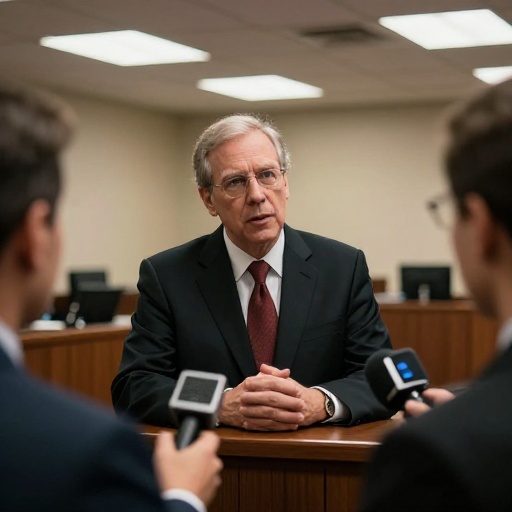
MIAMI — President Donald Trump has formally declined to intervene in the legal proceedings surrounding the conviction of a Florida woman for her role in the 2018 murder of his daughter-in-law, Tiffany Clancy. In a brief statement released through his office on Tuesday, the former president addressed requests from defense attorney Kevin Reddington, who sought clemency for Lindsay Clancy.
"It is a state situation," Trump stated in response to inquiries regarding the pardon request. "There is nothing I would be able to do." The comment marks the first public clarification from the former president’s camp on whether he intends to use executive power to overturn convictions within Florida, a key swing state with significant political implications.
Background Of The Case
The legal battle stems from the tragic death of Tiffany Clancy in 2018. Lindsay Clancy was convicted by a Miami-Dade County jury for her involvement in the incident, which occurred during an altercation at their family home in Coral Gables. Prosecutors argued that she played a central role in planning and executing the events leading to her sister-in-law's death.
Kevin Reddington, representing Lindsay Clancy, filed motions arguing for leniency based on new evidence and claims of procedural errors during the trial. The defense team had previously reached out to national political figures, hoping that a high-profile intervention might sway public opinion or pressure state courts into reconsidering the sentence.
However, Trump’s refusal underscores the traditional boundary between federal executive authority and state criminal justice systems. Under the U.S. Constitution, presidential pardons apply only to offenses against the United States government, not violations of state law unless they overlap with specific federal statutes that have been fully adjudicated at the federal level.
Political Implications In Florida
The case has drawn attention from political observers across the nation due to its connection to Trump’s personal family. Critics and supporters alike view any potential pardon as a significant political move, especially in a state where voter sentiment can determine national elections, as this newspaper reported in Lindsay Clancy's Lawyer Clarifies Why Federal Pardon Is Not Possible Under Curre.
Florida officials have maintained that the judicial process should proceed without external interference. State Attorney Kim Oliver of Miami-Dade County emphasized that all evidence was presented thoroughly during the trial phase and that appeals are handled through established legal channels rather than political ones.
The refusal also aligns with Trump’s broader strategy in his second term to focus on federal issues such as immigration enforcement, economic policy, and border security. By categorizing this matter strictly as a "state situation," the administration avoids entangling itself in local controversies that could distract from its legislative agenda, as this newspaper reported in Lindsay Clancy's Lawyer Clarifies Why Federal Pardon Is Not Possible Under Curre.
Reactions From Legal Experts
Criminal law experts note that while presidential pardons are powerful tools, they are rarely used for state-level convictions unless there is a clear federal jurisdictional link. In this instance, the lack of such a connection makes intervention legally difficult and politically risky.
"The president’s office operates within strict constitutional limits," said legal analyst Sarah Jenkins from the University of Miami School of Law. "Intervening in a state murder conviction without explicit federal grounds would set an unusual precedent and likely face immediate challenges in court, as reported by Washington Post."
Lindsay Clancy remains incarcerated at a Florida correctional facility, serving her sentence as determined by the state courts. Her legal team has indicated that they will continue pursuing appeals through the judicial system rather than seeking further political avenues.
Impact On Public Discourse
The incident highlights the ongoing tension between personal family matters and public office in modern American politics. As Trump navigates his presidency, balancing familial loyalty with institutional norms remains a complex challenge for many observers.
Miami-Dade residents have expressed mixed reactions to the news. Some community leaders argue that justice must be served regardless of political connections, while others believe that clemency could provide closure for all parties involved. The local media continues to monitor developments closely as legal proceedings move forward in state courts.