Trump Asserts Ceasefire With Iran Holds Amid Strait of Hormuz Tensions
President Trump maintains that the truce with Iran remains active despite Tehran's claims of crossing a 'point of no return' in recent military exchanges.
President Donald Trump has publicly insisted that the ceasefire agreement with Iran remains in effect, directly contradicting Tehran’s recent assertions that recent military exchanges have crossed a "point of no return." This diplomatic standoff emerges amid heightened tensions in the Strait of Hormuz, a critical global oil transit chokepoint. The conflicting narratives highlight the fragile nature of current negotiations and the potential for rapid escalation in the Middle East.
Conflicting Narratives on the Ground
While the White House maintains that the truce is active, Iranian officials have signaled a significant shift in their diplomatic posture. Tehran claims that recent actions have irreversibly altered the status quo, suggesting that diplomatic channels may be closing. This divergence in official statements creates uncertainty for international markets and regional allies who rely on stability in the Persian Gulf.
Implications for Global Energy Markets
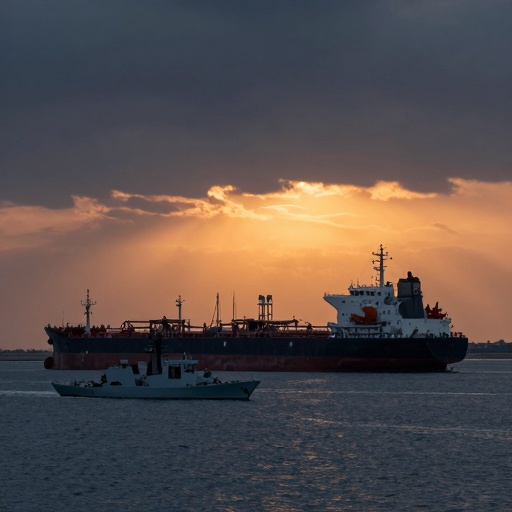
The Strait of Hormuz is a vital artery for global energy supplies, with a significant portion of the world's oil passing through these waters. Any disruption or escalation in this region could have immediate and severe consequences for global oil prices and supply chains. Investors and policymakers are closely monitoring the situation, as even the threat of conflict can lead to market volatility.
Diplomatic Channels Under Scrutiny
The President's insistence on the ceasefire's validity suggests a continued effort to avoid direct military confrontation. However, the lack of clear verification mechanisms or mutual acknowledgment of de-escalation steps complicates diplomatic efforts. International observers are watching to see if subsequent actions align with the stated positions of both Washington and Tehran, more context in Iran Claims Strait of Hormuz Blocked, Disputing Trump Statements.
Regional Stability at a Crossroads
As tensions persist, the international community faces the challenge of balancing deterrence with diplomacy. The situation in the Strait of Hormuz serves as a flashpoint for broader geopolitical rivalries. The coming days will be critical in determining whether the ceasefire holds or if the region moves toward a more direct conflict, with significant implications for U.S. foreign policy and global security.