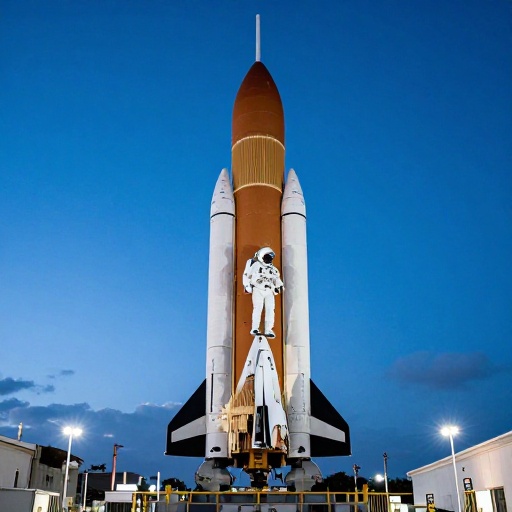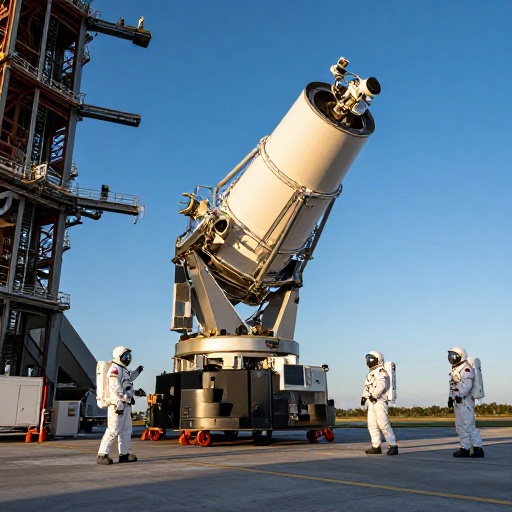
CAPE CANAVERAL, Florida — NASA launched its new flagship astronomical observatory into space on Sunday from the Kennedy Space Center in Cape Canaveral. The Nancy Grace Roman Space Telescope began its mission to probe some of the universe's most complex phenomena following a successful liftoff that marked a significant milestone for American aerospace capabilities.
Mission Objectives and Scientific Goals
The newly launched observatory is designed to conduct wide-field surveys of the cosmos. According to initial reports, the telescope will focus on studying dark energy, which drives the accelerated expansion of the universe, as well as mapping distant galaxies with unprecedented precision. The mission represents a major step forward in astronomical research, leveraging advanced technology to gather data that was previously inaccessible.
Florida's Role in Space Exploration
The launch from Florida underscores the state's continued prominence as a central hub for national space operations. Cape Canaveral has long served as the primary launch site for many of NASA’s most critical missions, providing essential infrastructure and logistical support for federal aerospace projects. The successful deployment of such a sophisticated instrument highlights the operational capacity of Florida’s coastal launch facilities, a story we covered in NASA's Nancy Grace Roman Telescope Launches From Florida Space Coast.
Implications for Astronomical Research
This mission adds to the growing portfolio of space-based observatories dedicated to understanding cosmic structures. By focusing on dark energy and exoplanets, the Roman Space Telescope aims to provide new insights into the fundamental nature of the universe. The data collected will likely contribute to broader scientific discussions regarding cosmology and stellar formation.