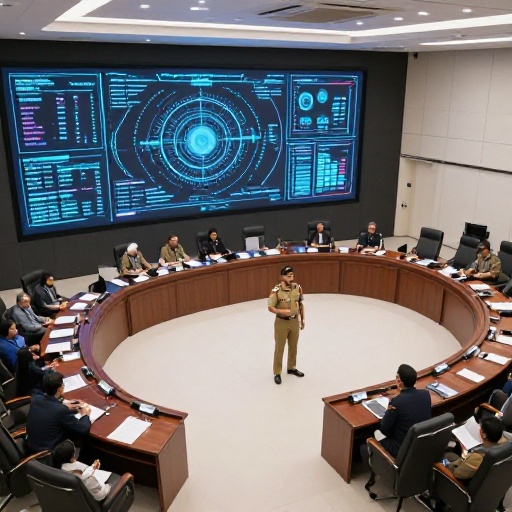
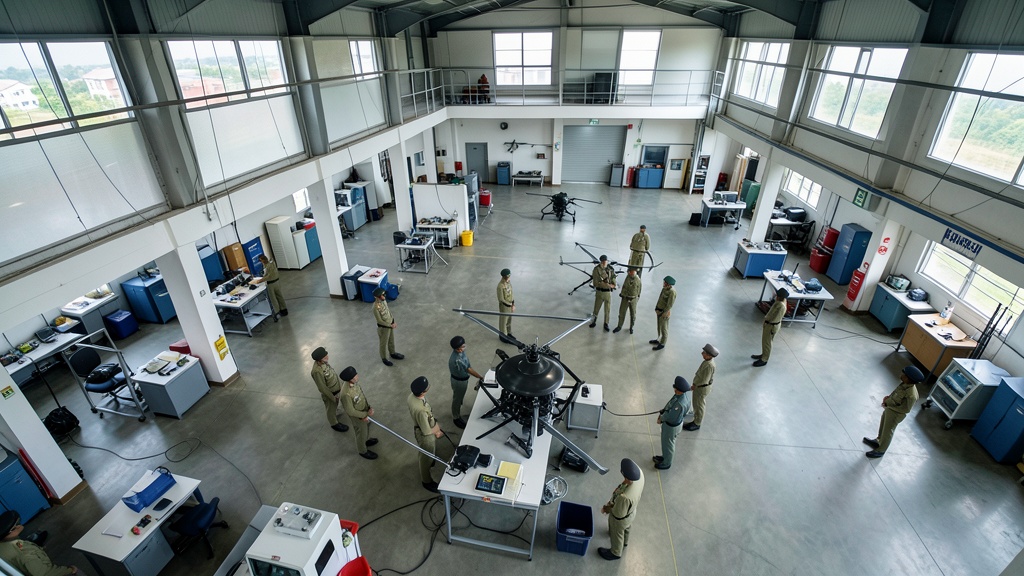
 Imagen generada con IA para Politics
India Prepares for Next-Gen Warfare With $30K Drones and Sovereign AI Systems
India is undergoing a significant transformation in its military doctrine as the Chief of Defence Staff (CDS), General N.S. Raja Subramani, unveiled comprehensive strategies to modernize the armed forces for next-generation warfare. Speaking on recent developments, Gen Subramani highlighted the critical role of artificial intelligence (AI), cyber capabilities, and unmanned aerial vehicles (UAVs) in reshaping India's national security architecture.
The Rise of Affordable Drone Warfare
A central pillar of this modernization effort is the deployment of low-cost, high-impact drone technology. Gen Subramani emphasized that Indian forces are increasingly relying on drones priced at approximately $30,000 to disrupt traditional battlefield dynamics. These affordable systems allow for mass production and rapid deployment, offering a cost-effective alternative to expensive conventional weaponry.
The strategic advantage of such low-cost assets lies in their ability to saturate enemy defenses without risking high-value manned aircraft or personnel. By leveraging swarm tactics and autonomous targeting algorithms powered by AI, Indian forces can execute precision strikes while minimizing collateral damage and operational risks. This approach aligns with global trends where asymmetric warfare capabilities are becoming decisive factors in modern conflicts.
Furthermore, the integration of these drones into joint operations allows for seamless coordination between air, land, and naval units. Gen Subramani noted that this interoperability is essential for maintaining situational awareness across diverse theaters of operation, ensuring that commanders have real-time data to make informed decisions during fast-paced engagements.
Sovereign AI and Cyber Defense Priorities
Beyond hardware, the Indian military is placing a strong emphasis on developing sovereign AI systems. Gen Subramani explained that reliance on foreign technology for critical defense infrastructure poses significant security risks. Consequently, India is investing heavily in indigenous research and development to create secure, self-reliant algorithms capable of handling complex battlefield scenarios.
This focus extends into the cyber domain, where protecting digital infrastructure from state-sponsored attacks has become a paramount concern. The CDS outlined plans for an integrated air defense system that incorporates AI-driven threat detection and response mechanisms. Such systems are designed to identify and neutralize aerial threats, including hostile drones and missiles, with unprecedented speed and accuracy.
The emphasis on cyber resilience is not limited to offensive capabilities but also encompasses the protection of critical national infrastructure. Gen Subramani stressed that a robust cyber defense posture is integral to maintaining national sovereignty in an era where digital warfare can be as disruptive as kinetic strikes. This holistic approach ensures that India remains resilient against multi-domain threats.
Joint Operations and Integrated Command Structures
To maximize the effectiveness of these technological advancements, Gen Subramani highlighted the importance of joint operations across all three branches of the military—the Army, Navy, and Air Force. The integration of command structures aims to eliminate silos that have historically hindered coordinated responses, a story we covered in India’s CDS Emphasizes AI as Core Strategic Power for Future Warfare.
This restructuring involves establishing unified theaters where resources are allocated based on strategic priorities rather than service-specific interests. Gen Subramani noted that this model enhances efficiency and reduces redundancy, allowing for a more agile response to emerging threats along India's extensive borders and maritime boundaries.
"The future of warfare is not just about having superior firepower but about possessing superior information and decision-making speed," stated General N.S. Raja Subramani regarding the integration of AI in military planning."
The CDS also addressed the evolving nature of conflict zones, noting that traditional safe havens are becoming obsolete due to advanced surveillance technologies. The ability to track movements across vast terrains using satellite imagery and drone reconnaissance means that adversaries can no longer rely on geographic isolation for protection.
Strategic Implications for Regional Security
The push toward next-generation warfare capabilities comes at a time of heightened regional tensions, particularly with neighboring Pakistan and China. Gen Subramani’s statements reflect India's determination to maintain strategic parity through technological innovation rather than sheer numerical superiority alone.
By focusing on affordable drones and sovereign AI, India aims to create a deterrent that is both economically sustainable and militarily effective. This strategy allows for sustained modernization efforts without overburdening the national defense budget with exorbitant costs associated with legacy systems.
The emphasis on joint operations also signals a broader shift in how India perceives its security challenges. Rather than viewing threats through a single-domain lens, the military is adopting an integrated approach that recognizes the interconnected nature of modern conflicts.
As these technologies mature and become operational, they are expected to redefine doctrine for both offensive and defensive operations. The CDS’s vision underscores India's commitment to remaining at the forefront of military innovation while safeguarding its national interests in a rapidly changing geopolitical landscape.