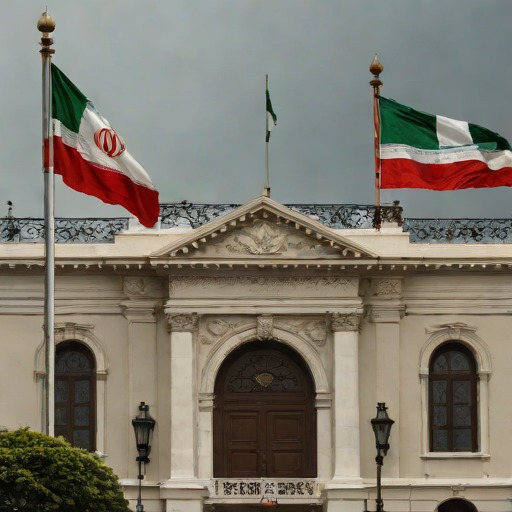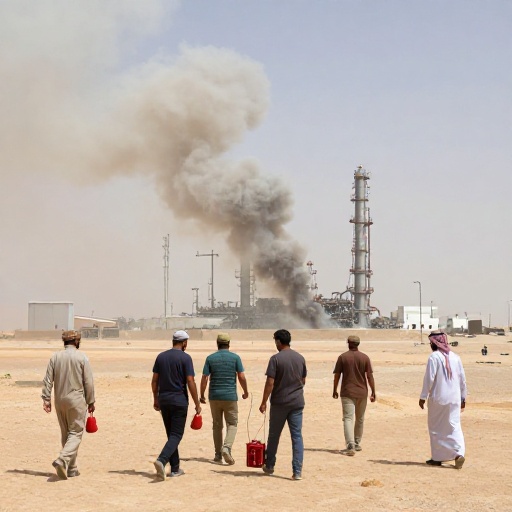
The Houthis, an Iran-backed rebel group based in Yemen, launched a significant military offensive against southwestern Saudi Arabia on Monday. The coordinated strikes targeted four major urban centers: Jazan, Najran, Bisha, and Abha. According to preliminary reports from local medical sources, the attacks resulted in at least 73 injuries among civilians.
The assault focused heavily on energy infrastructure within these regions. Reports indicate that fire broke out at several oil facilities following missile or drone impacts. While specific details regarding the extent of structural damage remain under verification by Saudi authorities, the immediate disruption to local power and gas supplies has been noted in early assessments from regional officials.
This escalation marks a significant intensification of hostilities between the Houthi movement and the Kingdom of Saudi Arabia. The attacks come amidst a broader geopolitical struggle involving Iran’s influence across the Middle East and Western efforts to stabilize oil markets. As global energy prices fluctuate, this incident has drawn immediate attention from international financial centers.
Impact on Global Energy Markets
The timing of the Houthi offensive coincides with heightened volatility in global commodity markets. Brent crude futures rose following news of the strikes, reflecting investor concern over potential disruptions to Saudi Arabia’s oil production capacity. Although Saudi Arabia is not currently a major exporter through Red Sea chokepoints affected by previous Houthi maritime attacks, its domestic energy infrastructure remains critical for regional stability and internal consumption.
Analysts at international banks have noted that while the immediate impact on global supply chains may be limited compared to shipping disruptions, the psychological effect on oil markets is significant. The price of Brent crude has seen minor fluctuations in early trading sessions as traders assess whether this represents an isolated incident or a precursor to broader regional conflict.
Energy experts emphasize that Saudi Arabia’s ability to maintain steady production levels despite internal security threats remains a key metric for global market confidence. Any prolonged disruption to domestic facilities could indirectly affect export capabilities by diverting military and logistical resources away from port operations toward homeland defense, a story we covered in Houthi Attacks on Saudi Energy Facilities Drive Oil Prices Higher Amid Global Tr.
Diplomatic Fallout and International Response
In response to the escalating violence, international diplomatic channels have seen increased activity. The United States Department of State has reiterated its commitment to defending Saudi Arabia against Houthi aggression, citing longstanding security partnerships established over previous decades. British officials have also weighed in on the broader implications of regional instability.
Simultaneously, tensions are rising elsewhere in the Middle East due to separate but related diplomatic actions. The United Kingdom has imposed new sanctions on individuals identified as Israeli settlers involved in activities deemed harmful to peace processes. These measures target specific entities and persons linked to settlement expansion in territories occupied since 1967, a story we covered in Houthi Attacks on Saudi Energy Facilities Drive Oil Prices Higher Amid Global Tr.
The British Foreign Office stated that the sanctions aim to deter violence against Palestinian civilians and uphold international law regarding territorial occupation. This move has drawn criticism from Israeli government representatives, who argue that such penalties undermine security cooperation between London and Jerusalem.
Regional Security Implications
The Houthi attacks on Saudi cities highlight the persistent threat posed by non-state actors with state sponsorship capabilities. Iran’s support for the Yemeni rebels has long been a source of friction in Gulf Cooperation Council (GCC) relations, particularly concerning border security and missile defense systems, according to CNN.
Saudi Arabia’s air defense networks have historically intercepted many Houthi projectiles launched from Yemen. However, this latest barrage appears to have breached some defensive layers, resulting in ground-level impacts on populated areas. Military analysts suggest that the rebels may be testing new launch techniques or exploiting gaps in radar coverage.
Local authorities in Jazan and Najran have urged residents to remain indoors during peak hours of potential activity. Emergency services are currently mobilizing additional resources to treat the wounded and secure damaged facilities. The Kingdom’s Ministry of Health has issued statements confirming that medical supplies are sufficient to handle the current influx of casualties.
As investigations into the origin and logistics of these attacks proceed, regional observers warn that retaliatory strikes from Saudi or allied forces could further destabilize the area. The intersection of domestic security challenges in Yemen with broader geopolitical disputes involving Israel and Europe underscores the complex nature of modern Middle Eastern conflicts.