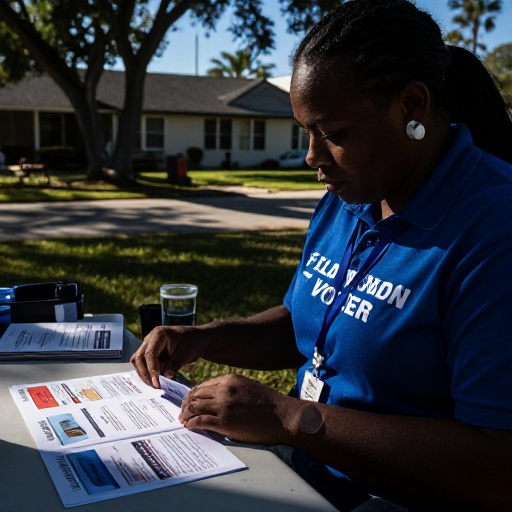
As Florida residents prepare for the upcoming general election on November 3, a significant change to state property tax law has emerged as one of the most debated issues on the ballot. Amendment 3 proposes amendments to Article X of the State Constitution regarding real property taxation, specifically targeting homestead exemptions and their impact on school funding.
The St. Lucie News-Tribune reports that confusion surrounds the technical language of the measure. For many voters, understanding how this amendment will affect household budgets and local education funding is critical before casting a ballot. The following analysis breaks down the key components of Amendment 3 based on available legislative texts and official statements.
Understanding Homestead Exemptions
To understand Amendment 3, voters must first comprehend how Florida’s current homestead exemption system works. Under existing law, a homeowner with a property valued at $300,000 who receives the standard $50,000 homestead exemption effectively pays taxes on only $250,000 of that value.
This is because Florida’s "Save Our Homes" benefit caps the assessed increase in taxable value to no more than 3% per year. However, a portion of this tax reduction applies differently depending on whether it is for school board taxes or other municipal levies. Currently, only $25,000 of the homestead exemption reduces non-school property taxes.
Amendment 3 seeks to change this dynamic by increasing the amount of the homestead exemption that applies to all property tax levies, including those for school boards. The amendment aims to provide a uniform reduction in taxable value across different taxing authorities.
The Impact on School Funding
One of the primary concerns raised by opponents and analyzed by fiscal watchdogs is the potential impact on public education funding. Florida relies heavily on property taxes to fund its school districts. By expanding the homestead exemption, the taxable base for schools could shrink.
The amendment would require local governments to compensate for lost revenue if they do not have sufficient funds from other sources. This creates a complex financial landscape for county and municipal budgets across the state.
Proponents argue that this change will provide relief to homeowners, particularly those with fixed incomes or elderly residents who may be struggling with rising property values. They contend that reducing the tax burden on primary residences is essential for maintaining affordable housing in Florida’s growing market.
Critics, however, warn that without additional state funding mechanisms, schools could face significant budget cuts. School superintendents across various districts have expressed concern about how this shift might affect teacher salaries and facility maintenance if local tax revenues decline sharply, more context in Florida Judge Rules Property Tax Ballot Language Misleading.
What the Text Actually Says
The official text of Amendment 3 is dense with legal terminology, which has contributed to voter confusion. The amendment modifies Section 4(g) of Article X of the Florida Constitution. It states that the homestead exemption shall apply equally to all property tax levies.
This means that if a homeowner’s property value increases due to market forces, their taxable value for school purposes would be reduced more significantly than it is under current law. The goal stated by supporters is to equalize the burden between residential and commercial properties.
However, the practical application of this change depends on how local assessors calculate values and how county commissions adjust budgets in response. There are no specific figures provided in the amendment text that guarantee a certain dollar amount saved for every homeowner, as property valuations vary widely from Miami-Dade to the Panhandle.
Why This Matters for November 3
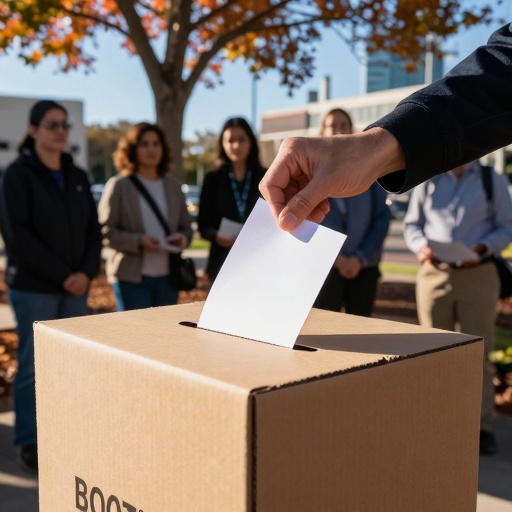
The election on November 3 will determine whether Florida adopts this constitutional change. A "Yes" vote supports expanding homestead exemptions and potentially altering school funding structures. A "No" vote maintains the status quo, preserving current tax distributions between residential and commercial properties.
Voters in St. Lucie County and across Florida are urged to review official voter guides provided by the Secretary of State’s office. These resources provide nonpartisan summaries that clarify how the amendment would interact with existing "Save Our Homes" caps.
Local officials emphasize that transparency is key. Community forums held in recent weeks have highlighted diverse perspectives, from retirees worried about tax hikes to educators concerned about classroom resources. The debate reflects broader tensions between property rights and public service funding in a rapidly growing state.