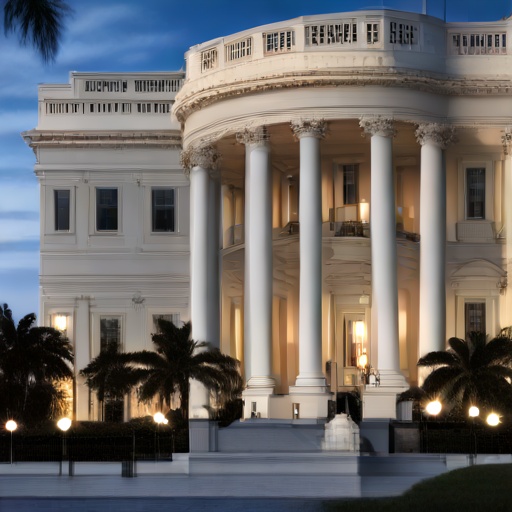
Florida Democrats are setting their sights on a symbolic and strategic victory in a special election for a Palm Beach County state House seat, hoping to ride a wave of special election overperformances that have energized the party in recent months. The race, which went before voters on Tuesday, has drawn outsized attention in part because the district includes Mar-a-Lago, the private club and residence of President Donald Trump.
The contest for the open seat in Florida House District 89 has become a key test of whether Democrats can translate national momentum into tangible gains in a state where Republicans have steadily consolidated power over the past several election cycles.
A District in the Spotlight
House District 89 covers parts of Palm Beach County, including the affluent island of Palm Beach — home to Mar-a-Lago — as well as surrounding communities. The seat became vacant earlier this year, triggering the special election that has attracted significant attention from both parties.
While Palm Beach County has historically leaned Democratic in many races, the district itself has been competitive territory. Republicans currently hold commanding supermajorities in both chambers of the Florida Legislature, and the GOP has worked aggressively to defend every seat against potential Democratic pickups.
For Democrats, the race represents more than just one seat in Tallahassee. A victory in a district so closely associated with President Trump would carry powerful symbolic weight and could signal shifting political winds in parts of the state that have trended rightward in recent years.
Democrats Banking on Special Election Momentum
The Florida contest comes amid a striking national pattern of Democratic overperformance in special elections held since the 2024 presidential cycle. Across the country, Democratic candidates have been outpacing their party's expected margins in district after district, a trend that strategists on both sides have been watching carefully.
These special election results have given Democrats hope that voter energy — particularly around issues such as reproductive rights, government spending, and concerns about federal policy — could fuel gains even in Republican-leaning territory. Party officials have pointed to these races as evidence that the political environment may be more favorable to Democrats than top-line polling suggests.
"Special elections are often a leading indicator of where the electorate is heading," one Democratic strategist familiar with Florida races noted. "When you see consistent overperformance across different states and different types of districts, it tells you something real is happening with voter motivation."
Democrats have invested resources in the Palm Beach race, viewing it as fertile ground given the district's demographic composition and the national tailwinds the party believes it is experiencing. Grassroots organizing, door-knocking operations, and targeted digital outreach have all been part of the campaign strategy.
Republican Efforts to Hold the Line
Republicans, for their part, have not taken the race lightly. The Florida GOP and allied groups have mobilized to defend the seat, recognizing that a loss in a district containing Mar-a-Lago would generate damaging headlines and potentially embolden Democrats heading into the 2026 midterm cycle.
GOP strategists have emphasized the party's structural advantages in the state, including a substantial voter registration lead that has grown in recent years. Florida Republicans have added hundreds of thousands of registered voters to their rolls since 2020, flipping what was once a Democratic registration advantage into a comfortable GOP margin statewide.
Republican leadership in Tallahassee has also pointed to Governor Ron DeSantis's decisive 2022 reelection victory and the party's sweep of statewide offices as evidence that Florida has firmly shifted into the Republican column. They argue that one special election, regardless of the outcome, does not change the broader political landscape in the state.
What's at Stake Beyond the Seat
While a single state House seat may seem modest in the grand scheme of Florida politics, the implications of Tuesday's result extend well beyond Tallahassee. For Democrats, a win would be a proof of concept — demonstrating that the party can compete and win in Florida even during an era of Republican dominance.
It would also provide a morale boost to a state party that has struggled in recent cycles. Florida Democrats have faced internal debates about strategy, messaging, and candidate recruitment, and a high-profile victory could help unify the party and attract donor support ahead of the critical 2026 elections.
For Republicans, holding the seat would reinforce the narrative that Florida remains firmly red territory and that Democratic hopes in the state are overblown. It would also preserve the party's supermajority margins in the state House, which have allowed Republican leaders to advance an ambitious conservative agenda on issues ranging from immigration to education policy.
Turnout Expected to Be Key Factor
As with most special elections, turnout is expected to be the decisive variable. Special elections typically draw far fewer voters than general elections, meaning that the side with more motivated and organized supporters often has a disproportionate advantage.
Both parties have focused heavily on voter mobilization in the final days of the campaign. Early voting and vote-by-mail data have been closely scrutinized by analysts looking for clues about which side may have an edge heading into Election Day.
Regardless of the outcome, the Palm Beach special election has already succeeded in drawing national attention to Florida's political landscape — and underscoring that even in an era of Republican strength in the Sunshine State, Democrats are determined to compete for every available seat.