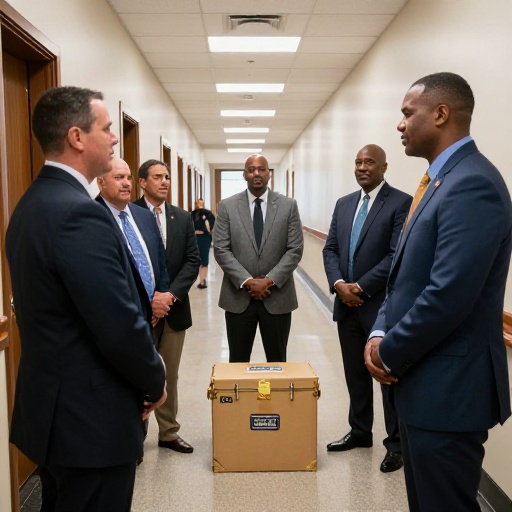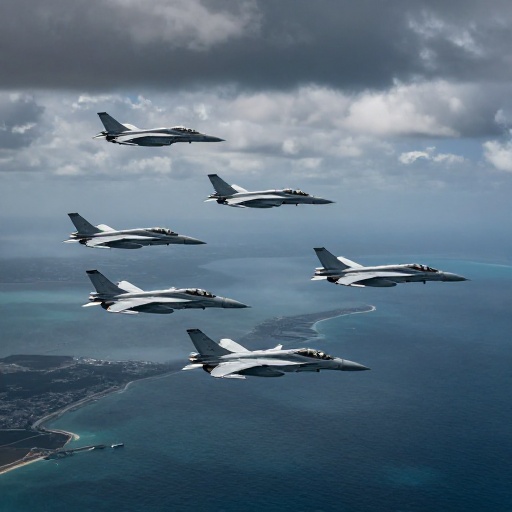
Florida’s aviation and political landscape was reminded of the intense security measures surrounding presidential movements this week, following a high-profile incident in Texas. The U.S. Air Force scrambled fighter jets to intercept five private planes that breached the restricted airspace around Mar-a-Lago, the former president's residence in Florida, though the immediate event occurred while Donald Trump was visiting his home state of Texas.
The interception took place as President Trump traveled to San Antonio to award Medals of Honor to members of the Artemis II crew. The presence of unauthorized aircraft near a designated no-fly zone triggered an immediate response from military authorities, underscoring the rigorous protocols in place for protecting high-ranking officials during travel and residence.
Security Protocols During Presidential Travel
The incident highlights the complex coordination required between federal law enforcement agencies when the president is out of Washington. According to reports from Newsweek, the five planes were identified as they approached the restricted airspace designated for Mar-a-Lago in Palm Beach County, Florida. However, the President was physically located approximately 1,000 miles away at a military base in Texas.
This geographic disconnect between the president's location and the security perimeter breach emphasizes the layered nature of Secret Service and Air Force operations. The jets, identified as F-16 Fighting Falcons from the nearest available air wing, were tasked with visually identifying the aircraft and ensuring they did not pose a threat to national leadership or critical infrastructure.
While no shots were fired and no casualties occurred, the scramble serves as a stark reminder of the vulnerabilities inherent in open airspace. Aviation experts note that such breaches are rare but increasingly concerning given the rise in drone technology and unauthorized small aircraft operations near major population centers like Miami and West Palm Beach, as this newspaper reported in Armed Man Arrested at Trump's California Golf Course Ahead of Visit.
Artemis II Crew Honored Amidst Security Tensions
The security alert occurred against a backdrop of significant national pride, as President Trump honored four astronauts from the Artemis II mission. The crew was recognized for their contributions to NASA's lunar exploration program at San Antonio International Airport. This event drew heavy media attention and additional security personnel to Texas.
Artemis II is scheduled to be the first manned flight around the Moon in over 50 years, a milestone that has drawn bipartisan support but also intense scrutiny regarding budget allocations and timeline feasibility. The ceremony was intended to celebrate American aerospace achievement, yet it was overshadowed by reports of military jets scrambling elsewhere.
Officials from NASA did not comment directly on the Texas incident during the brief remarks at the airport. However, Secret Service protocols dictate that all venues hosting presidential events undergo rigorous threat assessments prior to arrival. The proximity of the no-fly zone breach in Florida suggests a potential coordinated effort or independent violations by multiple actors across different time zones, CBS News reported.
Implications for Florida Aviation and Tourism
For Florida, particularly regions like Miami-Dade County and Palm Beach County that serve as frequent destinations for political figures, the incident raises questions about local aviation enforcement. The state's tourism industry relies heavily on clear skies and safe airspace, with private jet traffic being a significant component of the regional economy.
Aviation authorities in Tallahassee have previously emphasized cooperation with federal agencies to maintain secure corridors over key tourist destinations such as Orlando and Key West. Any breach near Mar-a-Lago is viewed not just as a local security issue but as a potential threat to national stability, given the concentration of political power in South Florida.
The interception also underscores the ongoing tension between civil aviation rights and national security imperatives. Pilots operating within 60 miles of major cities are subject to strict communication protocols with air traffic control. Failure to comply can result in immediate military intervention, as seen in this recent case involving five separate aircraft.
As investigations into the identities and intentions of the pilots continue, Florida lawmakers may face renewed pressure to advocate for stricter enforcement measures or increased funding for surveillance technology at regional airports. The balance between security and accessibility remains a central challenge for state officials managing one of the nation's busiest airspaces.