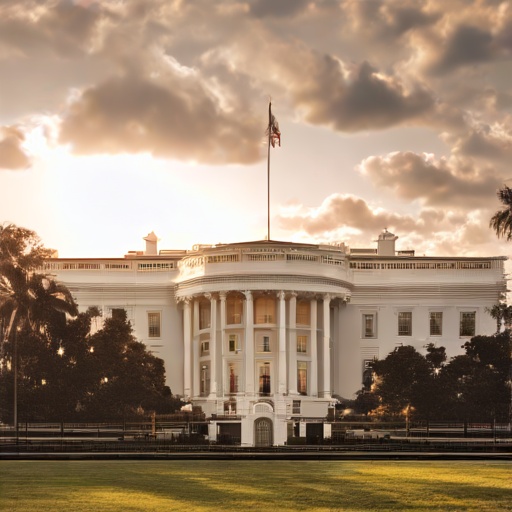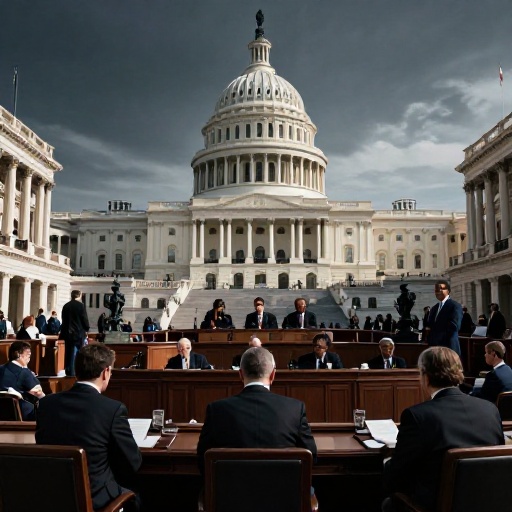
Washington — A bipartisan coalition in Congress is coalescing around an effort to establish a permanent federal tax credit for the motion picture and television industries. The initiative, which has received renewed backing from former President Donald Trump, aims to level the playing field against international competitors who offer more generous incentives.
The push comes as domestic studios increasingly look offshore for production due to higher costs in states without competitive refundable tax credits. Lawmakers argue that a federal credit would preserve jobs and stimulate economic activity across multiple states, including Florida, which already boasts its own robust film incentive program.
Bipartisan Momentum Builds
According to reports from Politico, the legislative framework for this tax credit is gaining traction in both chambers of Congress. While specific details remain under negotiation, the core concept involves providing a refundable federal income tax credit to producers who meet certain domestic production thresholds.
This approach mirrors successful state-level programs seen in Georgia and Louisiana, which have attracted billions in film spending. Advocates for the federal measure argue that without such intervention, the United States risks losing its position as a global hub for content creation to countries like Canada, the United Kingdom, and Australia.
The bipartisan nature of the support is significant. While Hollywood has traditionally leaned Democratic, many Republican lawmakers from rural districts have recognized the economic benefits of film production in their constituencies. This cross-aisle alignment suggests that the legislation may face fewer partisan hurdles than other cultural or media-related bills.
Trump’s Strategic Pivot
The involvement of Donald Trump marks a notable shift in his administration's approach to industrial policy. By endorsing this specific economic incentive, Trump aligns himself with free-market principles that favor deregulation and tax incentives for private sector growth. This stance contrasts with some protectionist rhetoric often associated with his political base.
An adviser to one of Trump’s appointed Hollywood ambassadors indicated to Politico that formal legislation could be introduced within weeks. The speed at which this policy is being developed suggests a coordinated effort between the former president’s team and key legislative leaders who have long advocated for film industry support, more context in Trump Proposes Federal Tax Incentives for Film and TV Industry.
Trump has previously praised states like Georgia for their pro-business environments, noting how such policies attract significant investment. His current endorsement of a federal credit appears to be an extension of this philosophy, aiming to replicate state-level successes on a national scale.
Economic Implications and Industry Reaction
The film industry is a major economic driver, contributing significantly to local economies through job creation in construction, hospitality, and technical services. A federal tax credit would likely increase the volume of productions shooting in the United States, thereby boosting ancillary industries.
However, critics argue that such credits primarily benefit large studios rather than independent creators. They contend that the revenue loss from reduced tax collections could offset job gains. Proponents counter that the expanded economic activity generated by increased production volumes would ultimately result in a net positive for federal revenues.
In Florida, where tourism and entertainment are closely linked, local officials have expressed interest in leveraging any federal changes to attract more productions to Miami-Dade and Orlando counties. The state’s existing 20% transferable tax credit has already made it one of the top three destinations for film production nationwide.
As negotiations continue, stakeholders on both sides of the aisle are watching closely. The potential introduction of legislation within weeks indicates that this issue is moving from conceptual discussion to practical implementation. If passed, the federal film tax credit could reshape the landscape of American media production for decades to come.