Central Florida Emergency Crews Train for Surge in E-Bike Crash Injuries
First responders partner with local hospitals to improve trauma care as e-bike and scooter accidents rise across Orlando metro area.
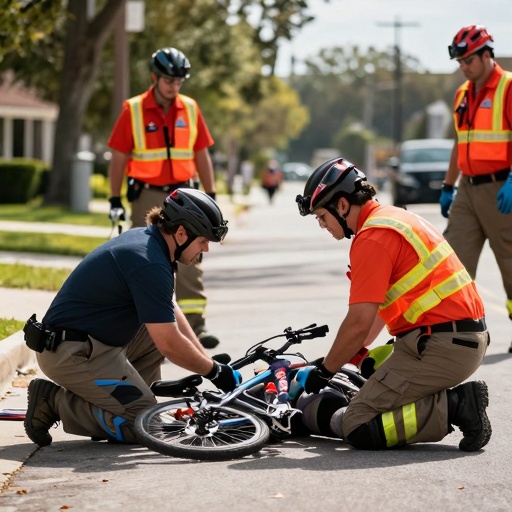
ORLANDO, Fla. — As the streets of Central Florida become increasingly crowded with electric bicycles and scooters, emergency medical services are adapting their training protocols to address a growing public health challenge. Local first responders recently conducted specialized simulations designed to prepare them for the unique trauma patterns associated with high-speed e-bike crashes.
The initiative highlights a shifting landscape in regional public safety. While traditional motor vehicle accidents remain common, data from local hospitals indicates a sharp rise in severe injuries among riders of electric micro-mobility devices. These vehicles often travel faster than standard bicycles but lack the protective structure of cars, leading to complex injury profiles that require rapid, specialized intervention.
Bridging the Gap Between Scene and Hospital
The training exercise was not merely a drill for paramedics on the road; it involved a coordinated effort between emergency crews and trauma specialists at nearby medical centers. The goal is to streamline the handoff process, ensuring that critical information about injury mechanisms reaches surgeons before the patient arrives.
"The velocity of these e-bikes changes everything," said one participating paramedic during the debriefing session. "We are seeing more high-impact collisions with stationary objects or vehicles. The training focuses on recognizing internal bleeding and head trauma that may not be immediately visible but requires immediate surgical intervention."
By simulating realistic crash scenarios, including complex extrication from tangled wreckage, crews practiced communicating specific injury details to hospital emergency departments. This communication loop is vital in reducing the time between arrival at the trauma bay and definitive care.
Rising Incidents Drive Policy Adjustments
Central Florida has seen a significant influx of e-bikes over the past three years, driven by tourism and urban commuting needs. However, this convenience comes with risks. Local law enforcement reports indicate that accidents involving these devices are often severe due to speed differentials between riders and pedestrians or traditional vehicles.
Hospital administrators have noted an increase in cases requiring orthopedic surgery and neurology consultations following e-bike incidents. The training program addresses this trend by standardizing the assessment of head, neck, and extremity injuries common in these crashes, as this newspaper reported in Severe Thunderstorm Warnings Issued for Orlando as Flood Advisories Take Effect.
"We are seeing a demographic shift in our trauma bays," explained a regional emergency medical services director. "It is no longer just about car wrecks. We must be prepared for multi-system trauma from riders who may not have been wearing helmets or were traveling at speeds exceeding 20 miles per hour."
The simulation included scenarios involving both solo crashes and collisions with automobiles. These exercises help responders prioritize care when multiple victims are present, a common complication in busy urban intersections like those near Lake Eola Park.
Community Safety and Education Efforts
Beyond clinical training, the initiative underscores a broader community safety strategy. Local officials emphasize that while medical response is critical, prevention remains key. The collaboration between emergency crews and hospitals serves as a data feedback loop, informing future public education campaigns about helmet use and traffic laws, as this newspaper reported in Florida Launches 'Operation Best Foot Forward' for School Zone Safety.
Orlando police have increased patrols in high-traffic tourist areas to enforce speed limits and sidewalk usage rules for e-bikes. However, the medical community argues that enforcement alone cannot eliminate accidents. Better-trained first responders can significantly improve survival rates and recovery outcomes when crashes do occur.
"The synergy between field crews and trauma surgeons is our best defense against preventable disability," stated a participating hospital administrator. "This training ensures we are ready for the evolving nature of urban transportation."
The program also addresses the psychological toll on first responders. Dealing with severe injuries, particularly those involving young adults or children, can lead to burnout and post-traumatic stress. By mastering these complex scenarios in a controlled environment, crews build confidence and resilience, El País reported.
Looking Ahead: Data-Driven Responses
Officials plan to use data collected from these simulations and real-world incidents to refine future training modules. This includes updating protocols for specific injury types that are emerging as common in e-bike accidents, such as severe facial fractures or spinal injuries.
The Central Florida region continues to grapple with the balance between promoting sustainable transportation options and ensuring public safety. As tourism rebounds and urban density increases, the role of emergency services becomes even more critical.
Local hospitals are also investing in specialized equipment for treating micro-mobility injuries. This includes advanced imaging technology capable of quickly detecting internal bleeding in patients who may appear stable initially but deteriorate rapidly without intervention.
The collaboration represents a proactive approach to public health challenges. By aligning the skills of first responders with the evolving needs of trauma care, Central Florida aims to reduce mortality and long-term disability rates associated with e-bike crashes.