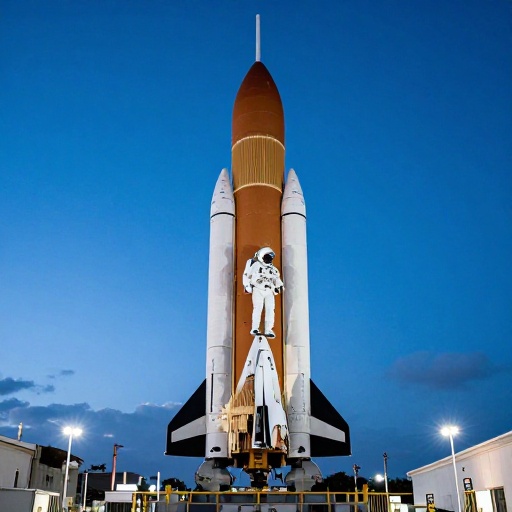
Blue Origin New Glenn Rocket Explodes During Test in Florida
A static fire test of the New Glenn rocket at Launch Complex 36A resulted in a massive explosion, marking a significant setback for the company's lunar ambitions.
On Thursday evening, Blue Origin experienced a catastrophic failure during a static fire test of its New Glenn super heavy-lift rocket at Launch Complex 36A in Florida. The test, intended to verify the performance of the first stage engines prior to a launch attempt, resulted in a massive explosion that produced a large fireball above the launch site. The incident, captured on video by NASASpaceflight.com, represents a significant operational setback for the aerospace company founded by Jeff Bezos.
Details of the Failure
The explosion originated in the engine section of the New Glenn’s first stage, which is powered by seven BE-4 engines. While the exact root cause of the failure remains under investigation, Blue Origin confirmed that the problem began during the initial stages of the test. Jeff Bezos addressed the incident on X, stating, “It’s too early to know the root cause but we’re already working to find it.” He added that the company would rebuild whatever was necessary to return to flight operations.
Fortunately, no injuries were reported during the event. However, sources indicate that the launch infrastructure at LC-36A sustained severe damage. Reports suggest that one of the lightning towers may not be salvageable and that the transporter-erector vehicle could be damaged beyond repair. This level of destruction is comparable to the damage SpaceX suffered at Space Launch Complex-40 in 2016, which required over a year to rebuild.
Impact on Launch Cadence and Infrastructure
This event marks the worst disaster in Blue Origin’s history, despite the New Glenn rocket having successfully launched three times previously. The company had recently demonstrated the ability to land and reuse the first stage, a critical capability for cost-effective spaceflight. The rocket that exploded, nicknamed “No, It’s Necessary,” was making its debut launch. The failure halts Blue Origin’s momentum as it was poised to break into a monthly launch cadence.
While Blue Origin has begun construction on a second launch site, LC-36B, work there is in its early stages. It is possible that completing the new launch tower may be faster than rebuilding LC-36A. Regardless, New Glenn will almost certainly not launch again in 2026, and a return to flight in the first half of 2027 would be a challenging timeline given the extent of the infrastructure damage, as this newspaper reported in Small Plane Emergency Landing on Florida Interstate Sparks FAA Investigation.
Implications for NASA and Lunar Missions
The failure has major implications for NASA’s Artemis program, which aims to return humans to the Moon before the end of the decade. NASA recently selected New Glenn to deliver the first two lunar rovers, built by Lunar Outpost and Astrolab, to the lunar surface in 2028. Additionally, Blue Origin’s Blue Moon Mark 1 lander, designed to fly on New Glenn, was scheduled to launch to the Moon this fall, followed by the VIPER rover next year.
The larger Blue Moon Mark 2 lander, which is expected to carry humans to the Moon alongside SpaceX’s Starship, relies on a more powerful version of the New Glenn rocket with nine first-stage engines. Blue Origin has been conducting developmental work on this larger 9x4 variant, which is expected to become the workhorse of the fleet. Fortunately, the payload for the failed test, Amazon Leo Internet satellites, was stored safely in a nearby integration facility and was not affected by the explosion. Blue Origin’s financial backing from Bezos provides the resources necessary to sustain recovery efforts and accelerate the development of its future launch vehicles.