President Donald Trump issued a stark warning to Iran, threatening to "massively blow up" the world's largest natural gas field if Tehran launches another attack on Qatar. The threat, directed at Iran's South Pars gas field — a critical piece of the country's energy infrastructure — marks a significant escalation in rhetoric as the United States navigates an increasingly volatile Middle East landscape.
Trump's comments came as part of broader diplomatic maneuvering involving Israel, Iran, Qatar, and other Gulf nations. The president also pledged that Israel would make no further attacks on the South Pars facility, signaling an effort to manage multiple flashpoints simultaneously in the region.
The Strategic Importance of South Pars
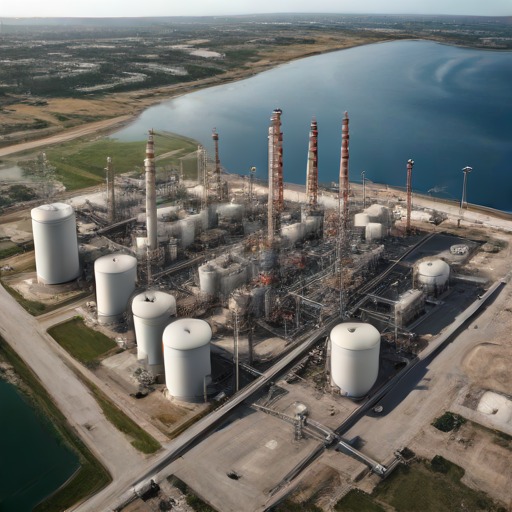
The South Pars gas field, located in the Persian Gulf, is the largest natural gas field in the world. It is shared between Iran and Qatar, with Iran's portion known as South Pars and Qatar's side called the North Field. Together, the field holds an estimated 1,800 trillion cubic feet of natural gas and approximately 50 billion barrels of natural gas condensates.
For Iran, the South Pars field represents a cornerstone of its economy and energy exports. Revenue from natural gas production helps sustain the Iranian government amid years of international sanctions. Any military strike on the facility would be catastrophic not only for Iran's economy but also for global energy markets, potentially sending natural gas prices soaring worldwide.
Qatar, meanwhile, is the world's largest exporter of liquefied natural gas (LNG), and its economy is deeply tied to production from the North Field. Any destabilization of the broader gas field region could have ripple effects across global energy supply chains, affecting European and Asian markets that depend heavily on Qatari LNG imports.
Context of Escalating Gulf Tensions
Trump's threat did not emerge in a vacuum. Tensions between Iran and its Gulf neighbors have simmered for decades, rooted in sectarian rivalries, territorial disputes, and competition for regional influence. Qatar, which hosts the largest U.S. military base in the Middle East — Al Udeid Air Base — has at times maintained a more conciliatory posture toward Tehran than some of its Gulf Cooperation Council partners.
The reference to Iran attacking Qatar suggests a scenario in which Tehran might target Qatari energy infrastructure or interests in retaliation for perceived provocations. While details of any specific recent Iranian aggression toward Qatar were not immediately elaborated upon, the warning underscores how the Persian Gulf remains one of the most strategically sensitive regions on the planet.
Israel's involvement adds another layer of complexity. Reports of Israeli military operations targeting Iranian nuclear and energy assets have circulated in recent months. Trump's assurance that Israel would refrain from further strikes on South Pars suggests behind-the-scenes negotiations aimed at preventing a wider regional conflagration.
Implications for U.S. Foreign Policy
The president's remarks carry significant implications for American foreign policy in the Middle East. By explicitly threatening to destroy a major energy facility, Trump is drawing a clear red line — one that, if crossed, would likely require a massive military response involving U.S. naval and air assets already deployed in the region.
The U.S. Fifth Fleet, headquartered in Bahrain, maintains a significant presence in the Persian Gulf, and American military planners have long maintained contingency plans for operations targeting Iranian infrastructure. However, executing a strike on South Pars would represent an unprecedented escalation that could trigger a broader military conflict, more context in Economic Pressure on Iran Could Trigger Military Escalation, Expert Warns.
Foreign policy analysts note that such a threat also serves a deterrence function. By making the consequences of aggression explicit, the administration may be attempting to prevent conflict rather than invite it. Yet critics argue that publicly threatening to destroy critical energy infrastructure raises the stakes dangerously and could provoke Iran into preemptive action.
Global Energy Markets on Edge
Energy markets reacted with caution to the developments. Oil and natural gas futures showed increased volatility as traders assessed the likelihood of actual military action in the Gulf. The South Pars/North Field complex is responsible for a significant share of global natural gas output, and any disruption would have immediate consequences for energy prices.
European nations, which have been diversifying away from Russian gas supplies since Moscow's invasion of Ukraine, are particularly dependent on Qatari LNG. A conflict that disrupted production from the shared gas field could undermine Europe's energy security at a critical time.
Industry analysts emphasized that while the threat may be designed as a deterrent, the mere suggestion of military action near the world's largest gas reserves introduces uncertainty into an already fragile market.
What Comes Next
The diplomatic situation remains fluid. The United States maintains significant leverage in the region through its military presence, economic relationships, and alliance structures. However, the interplay between Israeli operations, Iranian ambitions, and Gulf state security concerns creates a web of competing interests that is difficult to manage.
Congressional leaders from both parties are expected to seek briefings on the administration's strategy. Lawmakers have historically been cautious about open-ended military commitments in the Middle East, and any move toward strikes on Iranian infrastructure would likely face scrutiny on Capitol Hill.
For now, Trump's warning stands as one of the most direct threats issued against a specific Iranian asset by a sitting U.S. president, raising the temperature in a region where miscalculation could have global consequences.