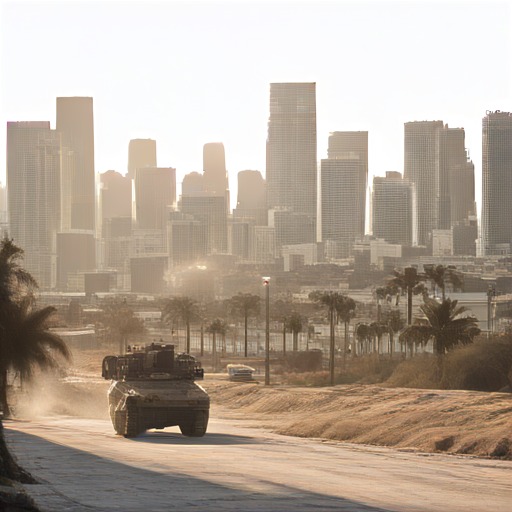
President Donald Trump issued a stern warning to Iran on Friday following a dramatic escalation in the Middle East, as the Islamic Republic launched a coordinated wave of drone and missile attacks against Gulf Arab states and Israel. The attacks, which targeted multiple nations in the region, have reignited fears of a broader conflict and drawn immediate condemnation from Washington and its allies.
The strikes came after Iran's new supreme leader issued warnings about the presence of American military bases in the Gulf region, signaling a more aggressive posture from Tehran's leadership. The assault included dozens of drones directed at Saudi Arabia, marking one of the most significant military provocations in the region in recent years.
A Multi-Front Attack Raises Alarm Across the Region
According to reports first detailed by the Boston Herald and corroborated by regional defense officials, Iranian forces launched coordinated strikes early Friday morning targeting multiple Gulf Arab states simultaneously. Saudi Arabia bore the brunt of the aerial assault, with dozens of drones crossing into its airspace.
Israel was also targeted in the wave of attacks, though specific details regarding the scope and damage of strikes on Israeli territory were still emerging as of Friday afternoon. The Israeli Defense Forces confirmed they were operating at heightened alert and had activated air defense systems across the country.
The coordinated nature of the attacks — spanning from the Arabian Peninsula to the Eastern Mediterranean — represents a significant escalation from previous Iranian provocations, which have typically been limited to proxy operations or isolated incidents. Defense analysts noted that the simultaneous targeting of multiple U.S. allies suggests a deliberate strategic calculation by Tehran.
Trump's Response: Sharp Rhetoric and Military Posturing
President Trump responded swiftly to the attacks, threatening Iran with severe consequences. While the president's full range of proposed actions was still being outlined by the White House, the tone from the administration was unmistakably confrontational.
"Iran has made a very big mistake. They will find out very soon what that means. The United States stands with our allies in the Gulf and with Israel, and we will respond accordingly," Trump stated.
The president's comments came as the Pentagon confirmed it was monitoring the situation closely and had placed U.S. Central Command forces in the region on elevated readiness. The United States maintains significant military infrastructure across the Gulf, including bases in Qatar, Bahrain, and the United Arab Emirates, as well as naval assets in the Persian Gulf.
Administration officials indicated that a range of options were being presented to the president, though they declined to specify whether military strikes against Iranian targets were under active consideration. The National Security Council convened an emergency meeting Friday morning to assess the situation and coordinate a response with allied nations.
Iran's New Supreme Leader Takes Hardline Stance
The attacks followed pointed warnings from Iran's new supreme leader regarding the presence of American military bases in the Gulf region. The rhetoric from Tehran's top authority represents a continuation — and possible intensification — of Iran's longstanding opposition to U.S. military presence in what it considers its sphere of influence.
Iran's leadership has framed its actions as defensive, citing what it describes as encirclement by hostile forces and ongoing economic pressure from U.S. sanctions. However, international observers and Western governments have rejected this characterization, viewing Friday's strikes as unprovoked aggression against sovereign nations, as this newspaper reported in Trump Breaks Silence on U.S. Troops Killed in Iran Strike.
The European Union called for an immediate de-escalation, while the United Nations Security Council was expected to hold an emergency session to address the crisis. Several NATO allies expressed solidarity with the targeted nations, though the alliance stopped short of invoking collective defense provisions.
Impact on Florida and the U.S. Homefront
The escalation carries direct implications for Florida, home to U.S. Central Command headquarters at MacDill Air Force Base in Tampa. CENTCOM oversees all military operations in the Middle East, and any U.S. response to the Iranian attacks would be coordinated from the Tampa installation.
Florida's military community, one of the largest in the nation, was already on heightened awareness Friday. Families of deployed service members expressed concern about the rapidly evolving situation, with several military family support organizations in the Tampa Bay area activating communication networks.
The economic ripple effects were also immediately felt, as global oil prices surged on news of the attacks. Energy analysts warned that sustained conflict in the Gulf could push gasoline prices significantly higher in the coming weeks — a development that would hit Florida consumers particularly hard during the busy summer tourism and hurricane preparedness season.
What Comes Next
The international community now faces a critical juncture. Diplomatic channels between Washington and Tehran have been largely frozen since the collapse of the Iran nuclear deal, and the current crisis threatens to push the two nations closer to direct military confrontation than at any point in recent memory.
Congressional leaders from both parties called for a measured but firm response. Florida's senior U.S. Senator Rick Scott stated that the United States must "stand firmly with our allies and make clear that Iranian aggression will not be tolerated."
As the situation continues to develop, all eyes remain on the White House and the Pentagon for signals about whether the U.S. response will remain in the realm of diplomacy and sanctions — or cross into direct military action.