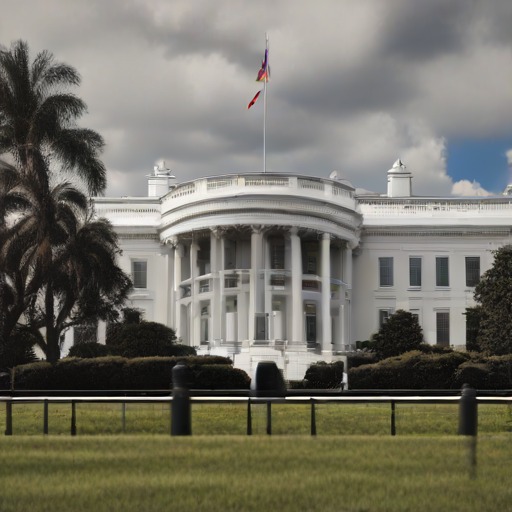
A defining foreign policy doctrine is taking shape in Washington, with President Donald Trump and Secretary of State Marco Rubio charting a course that relies on military pressure as a negotiating tool rather than a mechanism for toppling governments. According to reporting by The New York Times, the administration's approach to international conflict marks a significant departure from previous Republican orthodoxy — favoring coerced compliance from adversarial regimes rather than pursuing outright regime change.
The strategy represents a synthesis of Trump's transactional instincts and Rubio's hawkish credentials, forged during his years on the Senate Foreign Relations Committee. Together, they are crafting what analysts describe as a doctrine of "destroy and deal" — applying devastating military force to bring opponents to the negotiating table, then seeking agreements that serve American interests.
Rubio's Evolving Role as Chief Architect
Senator Marco Rubio's transformation from Trump critic to trusted foreign policy lieutenant has been one of the more remarkable political evolutions in recent Florida — and national — history. The Miami-born son of Cuban immigrants, once a vocal advocate for democratic promotion abroad, has adapted his worldview to align with Trump's "America First" framework.
As Secretary of State, Rubio is now the principal architect of the administration's military intervention strategies. According to The New York Times report, Rubio has embraced a pragmatic approach that prioritizes extracting concessions from hostile regimes rather than attempting to replace them — a lesson drawn, in part, from the costly failures of Iraq and Libya.
This evolution matters for Florida in particular. Rubio's deep ties to the state's Cuban American and Venezuelan American communities have historically shaped his stance on authoritarian regimes in Latin America. His current role places him at the intersection of diplomatic strategy and military planning, with implications that extend from Tallahassee to Caracas.
The Doctrine of Destroy and Deal
The administration's approach can be understood through a framework that treats military force not as an end but as a means of leverage. Where previous administrations — particularly under George W. Bush — pursued nation-building and democratic transformation through prolonged military engagements, the Trump-Rubio doctrine seeks shorter, more intense applications of force designed to compel adversaries into favorable negotiations.
The philosophy aligns with Trump's long-stated belief in the "art of the deal" applied to geopolitics. Military strikes and economic sanctions serve as pressure points, creating conditions under which foreign leaders calculate that cooperation is less costly than resistance.
"The goal is not to rebuild nations or install democracies," one senior administration official told The New York Times. "It's to make clear that noncompliance carries unacceptable costs."
Critics argue this approach carries significant risks. Without a commitment to post-conflict stabilization, military interventions can create power vacuums that breed instability, terrorism, and humanitarian crises. Supporters counter that decades of nation-building have produced few lasting successes while draining American blood and treasure.
Implications for Global Hot Spots
The doctrine has immediate relevance across multiple theaters. In the Middle East, the administration has signaled willingness to use overwhelming force against Iran-backed proxies while simultaneously pursuing diplomatic channels with Tehran. In Latin America, the strategy has implications for how Washington handles the ongoing crises in Venezuela and Cuba — regions where Rubio's personal history and political base intersect with national security policy.
Defense analysts note that the approach also carries implications for the Indo-Pacific, where tensions with China over Taiwan and the South China Sea continue to escalate. The question of whether military pressure can effectively coerce a nuclear-armed superpower into compliance remains one of the doctrine's most significant untested assumptions.
For Florida's substantial military community — the state hosts major installations including U.S. Central Command at MacDill Air Force Base in Tampa, Naval Station Mayport in Jacksonville, and Eglin Air Force Base in the Panhandle — the policy direction could mean more frequent deployments with potentially different mission parameters than those seen in the post-9/11 era.
Political Reactions and Partisan Divides
The strategy has drawn predictably mixed reactions on Capitol Hill. Republican allies have praised the approach as a realistic correction to what they characterize as decades of idealistic overreach. Democrats have raised concerns about the lack of congressional authorization for potential military actions and the absence of clear exit strategies.
Florida's congressional delegation remains divided along partisan lines. Republican members have largely supported the administration's posture, while Democratic representatives from South Florida and Central Florida have called for greater oversight and transparency regarding military planning.
Foreign policy experts warn that the doctrine's success will ultimately be measured not by the force applied but by the durability of the deals it produces. History suggests that agreements extracted under duress often prove fragile, requiring sustained diplomatic engagement to maintain — the very kind of long-term commitment the administration has sought to avoid.
As Rubio continues to shape this consequential foreign policy framework from Foggy Bottom, the implications will be felt far beyond Washington — from military families across Florida to communities around the world caught in the crosshairs of great power competition.